Filing notebooks

A document. A question. A calculation you can check.

Dated reading exercises, with the evidence kept separate from the conclusion.

Meta 2024 cash-flow reconciliation including finance lease principal.

Meta / FY2024 / September 10, 2026

The cash engine and the spending cycle

Why a common shortcut does not reproduce Meta's own free-cash-flow measure, and how to find the missing deduction.

Includes a source table, arithmetic bridge, limits of the conclusion, and a reusable worksheet.

Read the notebook
Official SEC source: 2024 10-K

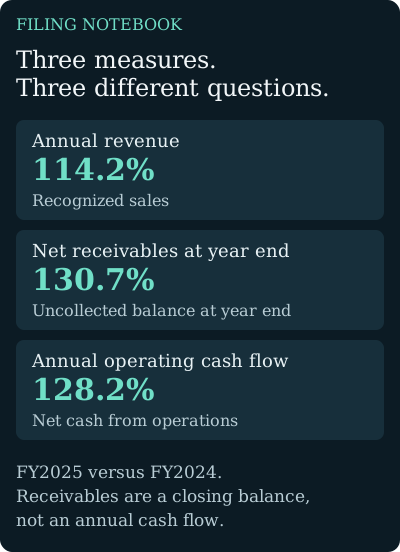
NVIDIA FY2025 growth in revenue, receivables, and operating cash, with different measurement scopes.

NVIDIA / FY2025 / September 10, 2026

Revenue growth is not a collection test

Why faster receivables growth raises a question rather than delivering a verdict. Trace the reported amounts and avoid double-counting direct and indirect customer concentration.

Read the NVIDIA notebook

Official SEC source: FY2025 10-K

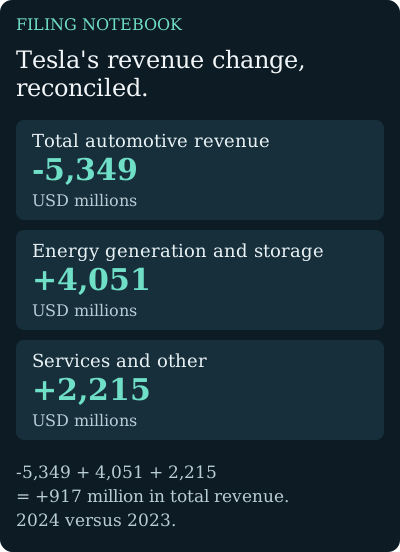
Tesla FY2024 automotive decline offset by energy and services growth, reconciled to a 917 million revenue increase.

Start your own notebook

Choose a reporting period and a question. Record the source, reproduce the relevant measure, and write the evidence that could change your conclusion. You can use the research workbench or follow the earnings verification workflow.

These notebooks are fixed-period educational examples. They are not automatically refreshed company opinions.