
Earnings are easier to read when the work starts before the release, not after it. Many investors wait for the press release to decide what matters. That usually puts the headline in charge. A better workflow starts with the prior filing and the unresolved questions it left behind.
Checking the right things before earnings matters because it prevents you from reacting to one number or one management phrase in isolation. It gives you a baseline for what the quarter actually needed to prove. The goal is not to read more words than necessary. It is to read the right part of the filing in the right order.
- The best pre-earnings work starts with the prior filing, not with consensus chatter.
- Focus on the few metrics or disclosures that can actually change the business read.
- A good pre-earnings checklist makes the release easier to interpret without guessing every outcome.
Why this matters
Checking the right things before earnings matters because it prevents you from reacting to one number or one management phrase in isolation. It gives you a baseline for what the quarter actually needed to prove.
Look at the prior filing summary, the last management discussion, margin trends, cash flow, working capital, and the one or two KPIs that should determine whether the business read improved or worsened.
What to look for
Look at the prior filing summary, the last management discussion, margin trends, cash flow, working capital, and the one or two KPIs that should determine whether the business read improved or worsened.
Use the prior filing to frame the release. The key question is not what the market expects. It is what the company still needs to prove from the last report.
- Read the prior filing summary.
- Write the one or two questions the quarter needs to answer.
- Choose the metrics and disclosures that would prove the answer.
- Know which source you will verify after the release.
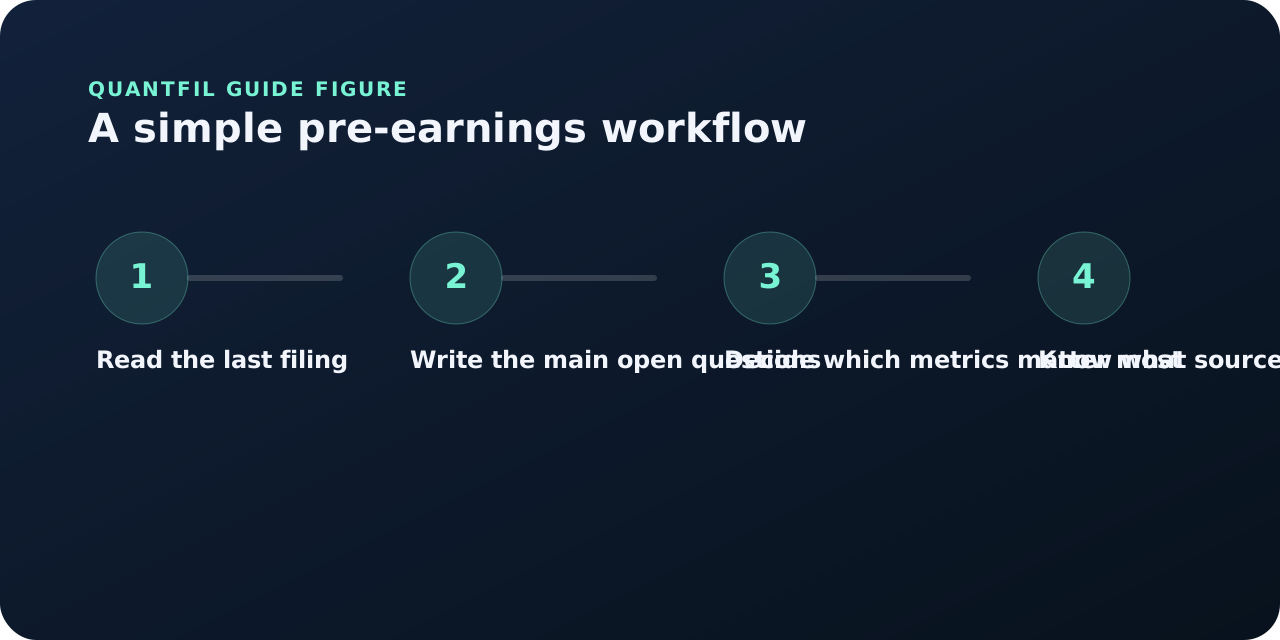
A practical workflow
Use the prior filing to frame the release. The key question is not what the market expects. It is what the company still needs to prove from the last report.
That workflow becomes easier to repeat when you write the next question down before moving on. The filing should not just be read. It should leave you with a sharper question than you had at the start.
Common mistakes
The common mistake is showing up to earnings without a prior thesis and letting the release itself choose the frame. That is how investors overreact to the wrong details.
A slower, more selective filing habit usually beats a faster but less structured one. In most cases the difference comes from knowing what you are trying to prove before you go hunting through the document.
How to use this on Quantfil
Quantfil helps because the filing summary, prior comparison, and statement sections make it easier to build a short pre-earnings checklist before the company reports.
Quantfil is most useful when the educational question comes first and the company page comes second. Learn the document, then use the filing page to apply that reading habit to a real report.
Try it on Quantfil
Move from the educational overview into live filing pages that show summaries, comparison cards, and source-linked context.
Frequently asked questions
Should I focus on consensus EPS and revenue first?
Not always. Those numbers matter, but the stronger question is what the filing left unresolved.
What is the fastest useful pre-earnings habit?
Read the last filing, note the open issues, and decide what would count as confirmation or disappointment.
Does this help if I am not trading the event?
Yes. It improves how you read the quarter even if you are a long-term investor.
How does Quantfil help?
It helps you review the prior filing and current business read quickly enough to arrive at earnings with better questions.
Primary sources and further reading
Editorial note and disclosure
Quantfil publishes these guides for informational purposes only. They are designed to help readers understand filing structure, investor workflow, and source verification, not to offer investment advice or security recommendations.
If a guide looks stale, unclear, or incomplete, use the source links above and review our editorial standards, corrections policy, and editorial team page for how the site handles updates and accountability.