
MD&A is one of the most useful filing sections because it turns raw results into management’s explanation of those results. Instead of just showing revenue, margin, or cash flow, the company has to discuss what it believes drove the period, what affected financial condition, and what investors should understand about the operating picture.
That makes MD&A a bridge section. It sits between the story and the statements. For beginners, it is often the first place where the filing starts to feel readable. For more experienced investors, it is one of the best places to test whether management’s framing deserves trust. Good MD&A reading is not about believing the company. It is about understanding the company’s explanation well enough to verify it.
- MD&A is where management explains recent operating and financial results in its own words.
- It is useful because it reveals what management thinks actually drove the period.
- The right way to read MD&A is alongside the statements, not instead of them.
Why MD&A matters
A filing without MD&A would still contain the numbers, but it would be harder to know which operating drivers management thinks matter most. MD&A makes those priorities visible. It can show whether management is emphasizing demand, mix, pricing, cost discipline, capacity, working capital, or liquidity. That matters because it helps you understand how the company wants the quarter or year to be interpreted.
It also matters because the explanation itself contains signal. A confident, specific, balanced discussion often reads differently from a vague, defensive, or highly qualified one. Investors should not assume tone equals truth, but they should recognize that management framing is part of the information set.
What to look for in MD&A
Look first for the stated drivers of revenue, margin, operating expenses, cash flow, and capital spending. If the company says margins improved because of mix, you want to see whether the statement pattern supports that. If it says liquidity is strong, you want to see whether cash, debt, and financing obligations support that. MD&A is useful because it tells you which story management wants you to test.
Also look for what is missing. If a major issue from the last filing is discussed less directly now, that can matter. If management changes the order of emphasis, adds more caution, or becomes less specific, that is part of the signal too. Silence is not always neutral in a filing.
- Revenue drivers and segment mix
- Margin explanation and cost structure
- Cash flow, liquidity, and capital needs
- Whether management tone changed from the prior filing
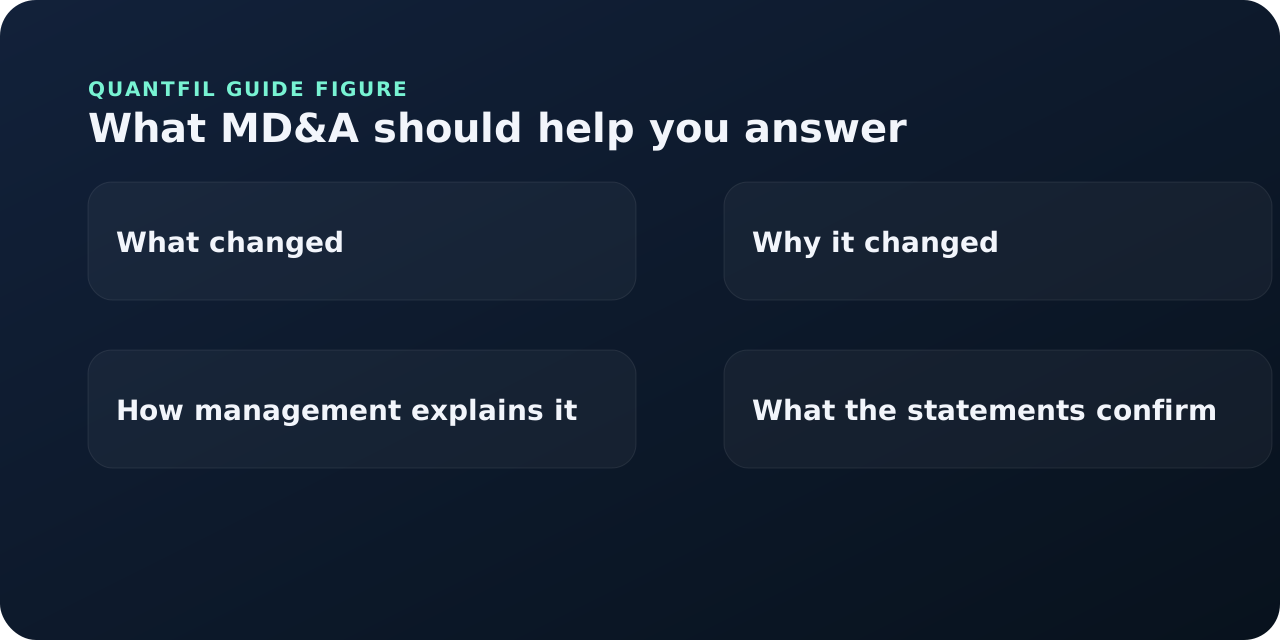
How to verify MD&A instead of just reading it
The most important habit is to tie every major MD&A claim back to the statements and notes. If management says the quarter was stronger because of demand, check revenue quality, gross margin, and working capital. If it says capital allocation is disciplined, check repurchases, capex, leverage, and cash conversion. If it says risk is manageable, check whether the risk section and notes sound equally calm.
This is why MD&A is such a useful section on Quantfil-backed workflows. It gives you a stated interpretation that can be compared with filing summary text, comparison cards, and statement visuals. The section becomes much more useful when it is treated as a set of claims to be tested.
How to use MD&A on Quantfil
On Quantfil, MD&A-style thinking shows up in the summary, the takeaways, the worked-versus-risk framing, and the current-versus-prior comparison. The platform helps you identify the main claims embedded in the latest filing read. Then the source filing helps you decide whether management’s own discussion and the reported numbers support that interpretation.
A practical example is to open Apple's filing summary, note the emphasis on services, margins, and cash generation, and then verify whether those themes appear cleanly in management discussion and the statements. That is the right way to use both the platform and the filing.
Common MD&A mistakes
One mistake is treating MD&A as if it were objective summary rather than management framing. Another is ignoring it entirely and going straight to the statements. The best approach sits between those extremes. Read it seriously, but verify it. A third mistake is reading MD&A only for optimism or caution instead of reading it for specificity, changes in emphasis, and consistency with the numbers.
Investors also underuse prior-period comparison here. If the current MD&A explains the business differently than the prior filing did, that often matters more than whether the language sounds positive. A changed explanation can signal a changed business read.
Try it on Quantfil
Move from the educational overview into live filing pages that show summaries, comparison cards, and source-linked context.
Frequently asked questions
Where does MD&A appear?
It appears in periodic filings such as the 10-K and 10-Q as management’s discussion of financial condition and results of operations.
Is MD&A more important than the statements?
No. It is different. MD&A explains; the statements verify.
Can investors rely on MD&A alone?
No. It should always be checked against the statements, notes, and related disclosures.
Why do experienced investors read MD&A carefully?
Because it shows what management believes mattered most and how that explanation changes over time.
Primary sources and further reading
Editorial note and disclosure
Quantfil publishes these guides for informational purposes only. They are designed to help readers understand filing structure, investor workflow, and source verification, not to offer investment advice or security recommendations.
If a guide looks stale, unclear, or incomplete, use the source links above and review our editorial standards, corrections policy, and editorial team page for how the site handles updates and accountability.