
Revenue growth is useful, but it does not automatically mean the business improved in a durable way. A company can grow because of pricing, mix, acquisitions, timing, or accounting treatment that says less about the underlying quality of the engine than the headline implies. Revenue growth is one of the easiest ways for a company to win the headline. The harder job is figuring out whether the business actually became stronger or simply produced a better-looking number for this period.
This matters because investors often equate higher revenue with better business quality. That shortcut can break when the growth is narrow, low quality, or expensive to produce. The goal is not to read more words than necessary. It is to read the right part of the filing in the right order.
- Revenue growth is not self-explanatory.
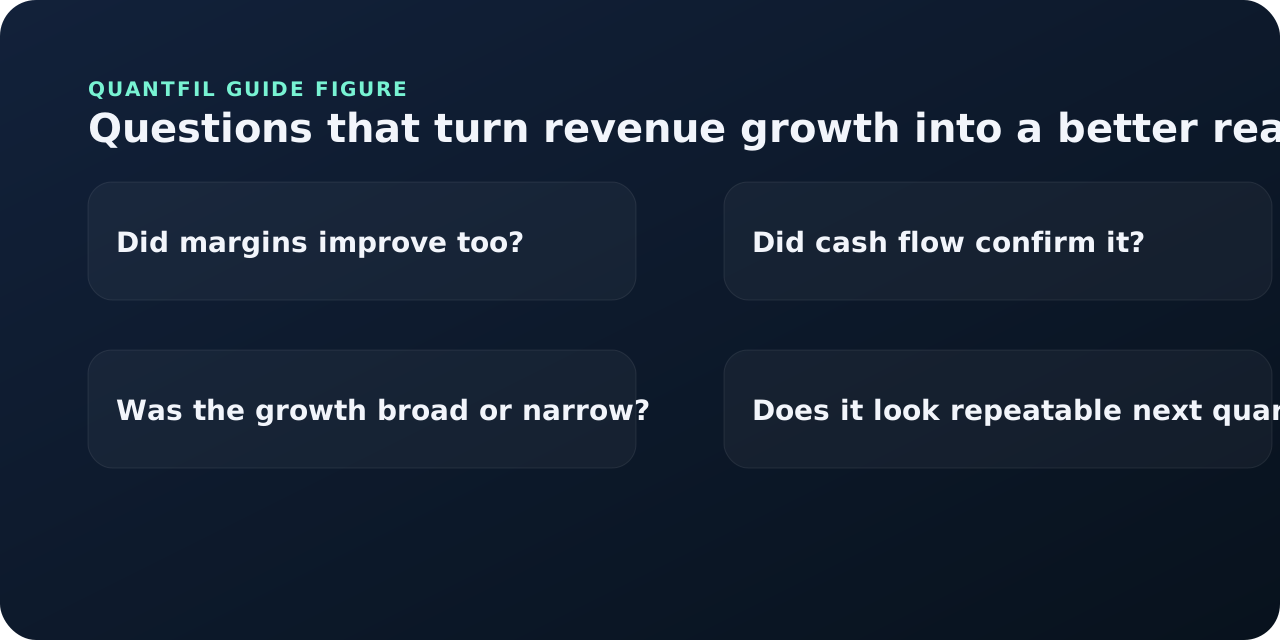
- A better business usually shows support in margins, cash flow, and breadth of contribution.
- The right question is not only how much the company grew, but how it grew.
Why this matters
This matters because investors often equate higher revenue with better business quality. That shortcut can break when the growth is narrow, low quality, or expensive to produce.
Look for gross margin, operating margin, cash flow, segment breadth, working capital behavior, and whether the source of growth looks repeatable rather than temporary.
What to look for
Look for gross margin, operating margin, cash flow, segment breadth, working capital behavior, and whether the source of growth looks repeatable rather than temporary.
Use revenue growth as the opening clue, then ask whether the rest of the filing says the business is becoming cleaner, broader, and more durable or simply louder.
- Read the revenue change and note the claimed driver.
- Check margins, cash flow, and working capital for support.
- Look for segment or product concentration that makes the growth less durable.
- Decide whether the filing reads like real improvement or like a favorable period.
A practical workflow
Use revenue growth as the opening clue, then ask whether the rest of the filing says the business is becoming cleaner, broader, and more durable or simply louder.
That workflow becomes easier to repeat when you write the next question down before moving on. The filing should not just be read. It should leave you with a sharper question than you had at the start.
Common mistakes
The common mistake is treating revenue as the answer rather than as the start of the question. The better habit is to ask what kind of growth it was and what it cost the company to produce it.
A slower, more selective filing habit usually beats a faster but less structured one. In most cases the difference comes from knowing what you are trying to prove before you go hunting through the document.
How to use this on Quantfil
Quantfil helps here because the filing summary and comparison cards make it easier to separate growth that improved the whole read from growth that only changed the headline.
Quantfil is most useful when the educational question comes first and the company page comes second. Learn the document, then use the filing page to apply that reading habit to a real report.
Ask yourself
Try it on Quantfil
Move from the educational overview into live filing pages that show summaries, comparison cards, and source-linked context.
Try the next workflow
Use one of these next-step pages if you want to turn the concept into a repeatable habit on a live filing, earnings setup, or company comparison task.
Frequently asked questions
Is strong revenue growth still a good sign?
Often yes. The point is not to dismiss it. The point is to test whether it also improved the quality of the business.
What is one warning sign here?
Revenue growth without margin or cash-flow support is often a sign that the improvement is less durable than it looks.
Does segment reporting help?
Yes. Segment detail can show whether growth was broad-based or dependent on one engine.
How does Quantfil help?
It helps move the reader from the headline growth rate to the cross-checks that tell you whether the growth deserves confidence.
Primary sources and further reading
Editorial note and disclosure
Quantfil publishes these guides for informational purposes only. They are designed to help readers understand filing structure, investor workflow, and source verification, not to offer investment advice or security recommendations.
If a guide looks stale, unclear, or incomplete, use the source links above and review our editorial standards, corrections policy, and editorial team page for how the site handles updates and accountability.