
The annual filing and the quarterly filing should not be read as separate hobbies. The better habit is to use the 10-K to build the baseline and the 10-Q to test whether that baseline is strengthening, weakening, or staying noisy. Many investors read the annual filing thoroughly and then treat the quarterlies like small updates. That often misses the point. The quarterlies are where trend, pressure, and verification work actually happen.
This matters because the quarter can only be understood correctly when the annual baseline is clear. Without that baseline, investors confuse seasonal noise with real business change. The goal is not to read more words than necessary. It is to read the right part of the filing in the right order.
- The 10-K should define the baseline questions.
- The 10-Q should test whether those questions changed, not merely restate the quarter.
- The most useful quarterly read usually starts with the prior unresolved issue.
Why this matters
This matters because the quarter can only be understood correctly when the annual baseline is clear. Without that baseline, investors confuse seasonal noise with real business change.
Start with the annual business model and risk map, then read each quarter for delta: margins, cash conversion, working capital, management tone, and any change in what the company now wants you to focus on.
What to look for
Start with the annual business model and risk map, then read each quarter for delta: margins, cash conversion, working capital, management tone, and any change in what the company now wants you to focus on.
Use the 10-K to define what should matter, then use the 10-Q to test whether those same issues are improving, worsening, or being replaced by a new pressure point.
- Use the 10-K to write a simple baseline on business quality, risks, and statement support.
- Open the next 10-Q and check whether the same issues still dominate the read.
- Use cash flow, margins, and working capital to verify whether the quarter really improved the story.
- Update the watchlist before the next reporting window arrives.
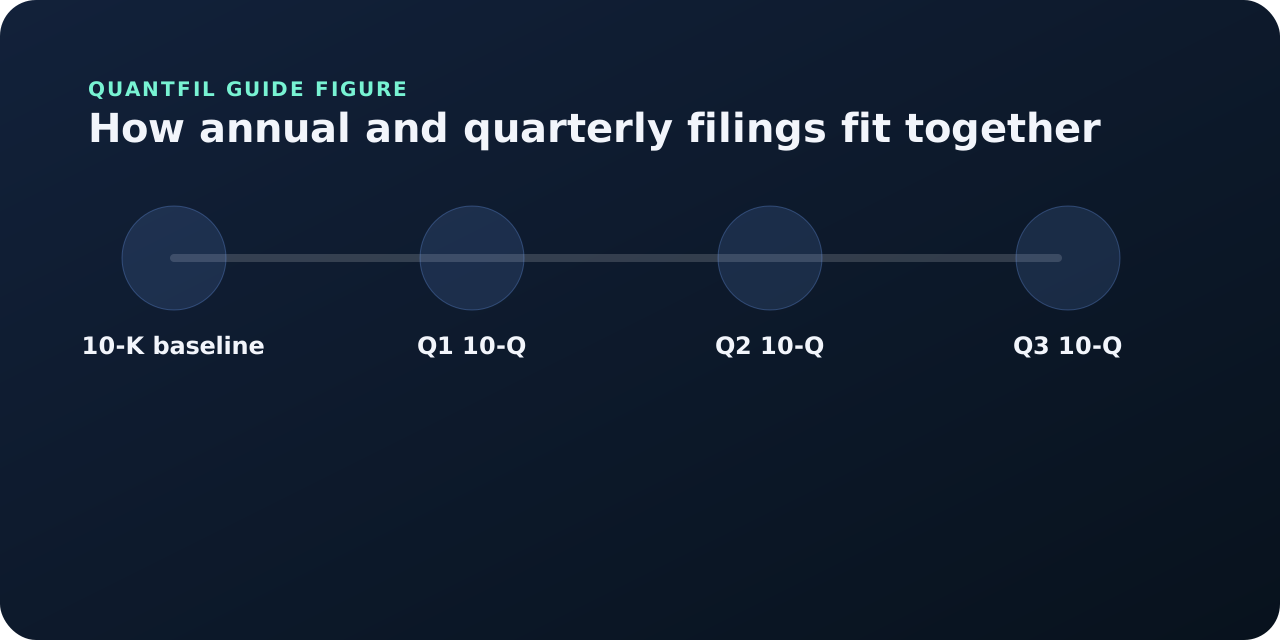
A practical workflow
Use the 10-K to define what should matter, then use the 10-Q to test whether those same issues are improving, worsening, or being replaced by a new pressure point.
That workflow becomes easier to repeat when you write the next question down before moving on. The filing should not just be read. It should leave you with a sharper question than you had at the start.
Common mistakes
The common mistake is reading the quarter as if it has no memory. A quarter means much more when it is compared with the annual base case and the previous quarter's unresolved questions.
A slower, more selective filing habit usually beats a faster but less structured one. In most cases the difference comes from knowing what you are trying to prove before you go hunting through the document.
How to use this on Quantfil
Quantfil supports this by making the current-versus-prior comparison explicit. It is easier to use the quarter well when the previous filing is already part of the frame.
Quantfil is most useful when the educational question comes first and the company page comes second. Learn the document, then use the filing page to apply that reading habit to a real report.
Ask yourself
Try it on Quantfil
Move from the educational overview into live filing pages that show summaries, comparison cards, and source-linked context.
Try the next workflow
Use one of these next-step pages if you want to turn the concept into a repeatable habit on a live filing, earnings setup, or company comparison task.
Frequently asked questions
Should I always read the 10-K before the 10-Q?
If you are new to the company, yes. If you already know the annual baseline, the quarter can be read first as long as you compare it back to the last annual report.
What is the main purpose of the quarter in this workflow?
To tell you whether the annual business read is holding together, not just whether one metric beat expectations.
What if the quarter looks good but the annual risks are still unresolved?
Then the cleaner read is probably still incomplete. A strong quarter does not automatically remove a structural risk.
How does Quantfil help?
It helps keep the prior filing in frame so the current quarter is read as a delta instead of an isolated headline.
Primary sources and further reading
Editorial note and disclosure
Quantfil publishes these guides for informational purposes only. They are designed to help readers understand filing structure, investor workflow, and source verification, not to offer investment advice or security recommendations.
If a guide looks stale, unclear, or incomplete, use the source links above and review our editorial standards, corrections policy, and editorial team page for how the site handles updates and accountability.