
Working capital rarely drives the market headline, but it often changes how trustworthy the headline should feel. Working capital is one of the easiest places for a filing to become more interesting. It can show whether demand is real, whether collections are slowing, or whether inventory and supplier terms are changing the business read.
Working capital matters because it affects cash flow and often reveals pressure before the headline does. A business can look strong in the income statement while becoming less healthy in receivables, inventory, or payables. The goal is not to read more words than necessary. It is to read the right part of the filing in the right order.
- Working capital can change the quality of a quarter quickly.
- Receivables, inventory, and payables should be read against revenue and cash flow.
- A cleaner filing usually shows healthier consistency across those lines.
Why this matters
Working capital matters because it affects cash flow and often reveals pressure before the headline does. A business can look strong in the income statement while becoming less healthy in receivables, inventory, or payables.
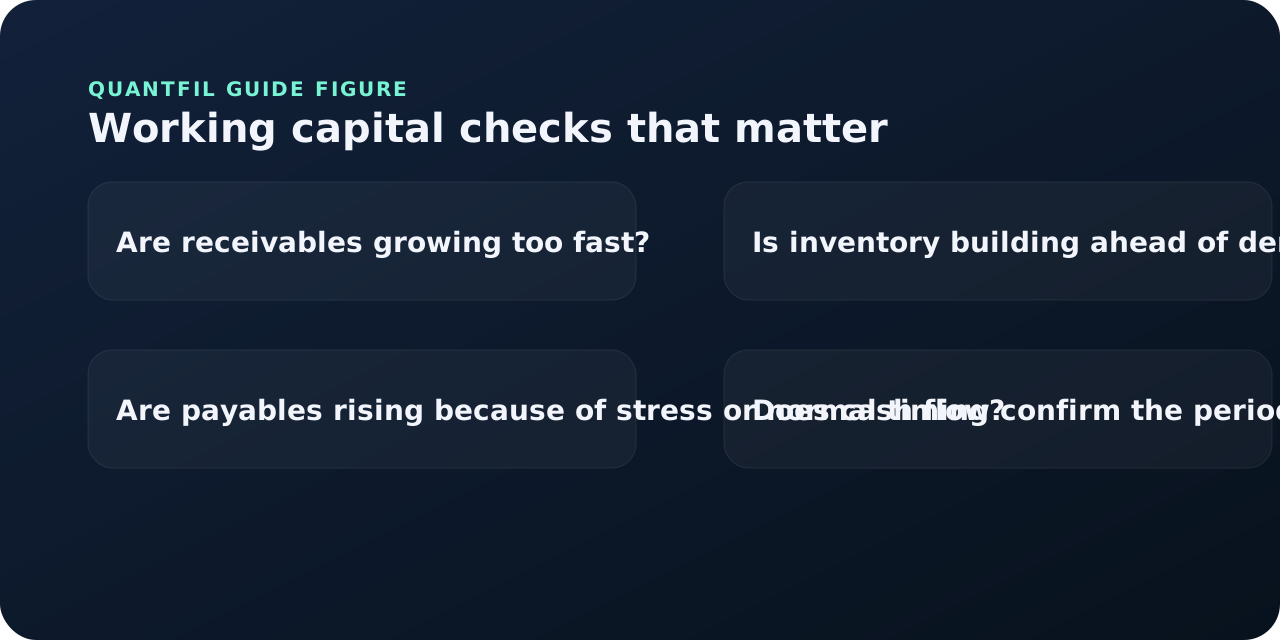
Compare receivables, inventory, payables, and operating cash flow with revenue growth. If those lines are moving out of sync, the filing deserves more skepticism.
What to look for
Compare receivables, inventory, payables, and operating cash flow with revenue growth. If those lines are moving out of sync, the filing deserves more skepticism.
Use working capital as a reality check. It is most useful when the company is reporting improvement that still feels too clean on the surface.
- Check revenue growth.
- Compare receivables and inventory movement with that growth.
- Look at payables and operating cash flow.
- Decide whether the quarter still looks as clean as the headline suggests.
A practical workflow
Use working capital as a reality check. It is most useful when the company is reporting improvement that still feels too clean on the surface.
That workflow becomes easier to repeat when you write the next question down before moving on. The filing should not just be read. It should leave you with a sharper question than you had at the start.
Common mistakes
The common mistake is ignoring working capital because it feels too detailed. Another is reading the movement without comparing it to the growth and cash-flow picture around it.
A slower, more selective filing habit usually beats a faster but less structured one. In most cases the difference comes from knowing what you are trying to prove before you go hunting through the document.
How to use this on Quantfil
Quantfil helps because the company notes, statement sections, and cash-flow framing make it easier to notice when working capital deserves a deeper source read.
Quantfil is most useful when the educational question comes first and the company page comes second. Learn the document, then use the filing page to apply that reading habit to a real report.
Try it on Quantfil
Move from the educational overview into live filing pages that show summaries, comparison cards, and source-linked context.
Frequently asked questions
Why does working capital matter so much?
Because it often affects cash flow and can reveal pressure before the headline catches up.
What is one warning sign?
Receivables or inventory rising much faster than revenue can be a useful warning sign.
Do I need industry context here?
Yes. The pattern matters more than the raw number, and context can help explain whether the move is normal.
How does Quantfil help?
It helps you connect working-capital movement with the broader filing read instead of treating it as a separate accounting chore.
Primary sources and further reading
Editorial note and disclosure
Quantfil publishes these guides for informational purposes only. They are designed to help readers understand filing structure, investor workflow, and source verification, not to offer investment advice or security recommendations.
If a guide looks stale, unclear, or incomplete, use the source links above and review our editorial standards, corrections policy, and editorial team page for how the site handles updates and accountability.