
Segment reporting is one of the best ways to move past the company-wide headline and see which part of the business actually drove the period. A company can post one set of overall numbers while its segments tell a far more uneven story. Segment reporting helps you avoid treating the business as if every part moved the same way.
Segment reporting matters because it shows which businesses are carrying the company and which ones are weakening it. That can change how durable the headline quarter or year really looks. The goal is not to read more words than necessary. It is to read the right part of the filing in the right order.
- Segment reporting helps localize the source of growth or pressure.
- A company-wide result can hide a more uneven segment picture.
- Segment mix often changes how durable the filing looks.
Why this matters
Segment reporting matters because it shows which businesses are carrying the company and which ones are weakening it. That can change how durable the headline quarter or year really looks.
Look for segment growth, segment profit mix, and whether the company is becoming more dependent on one engine. Then compare that picture with how management talks about the business overall.
What to look for
Look for segment growth, segment profit mix, and whether the company is becoming more dependent on one engine. Then compare that picture with how management talks about the business overall.
Use segment reporting to localize the change. Once you know which part of the company drove the result, the rest of the filing becomes easier to interpret.
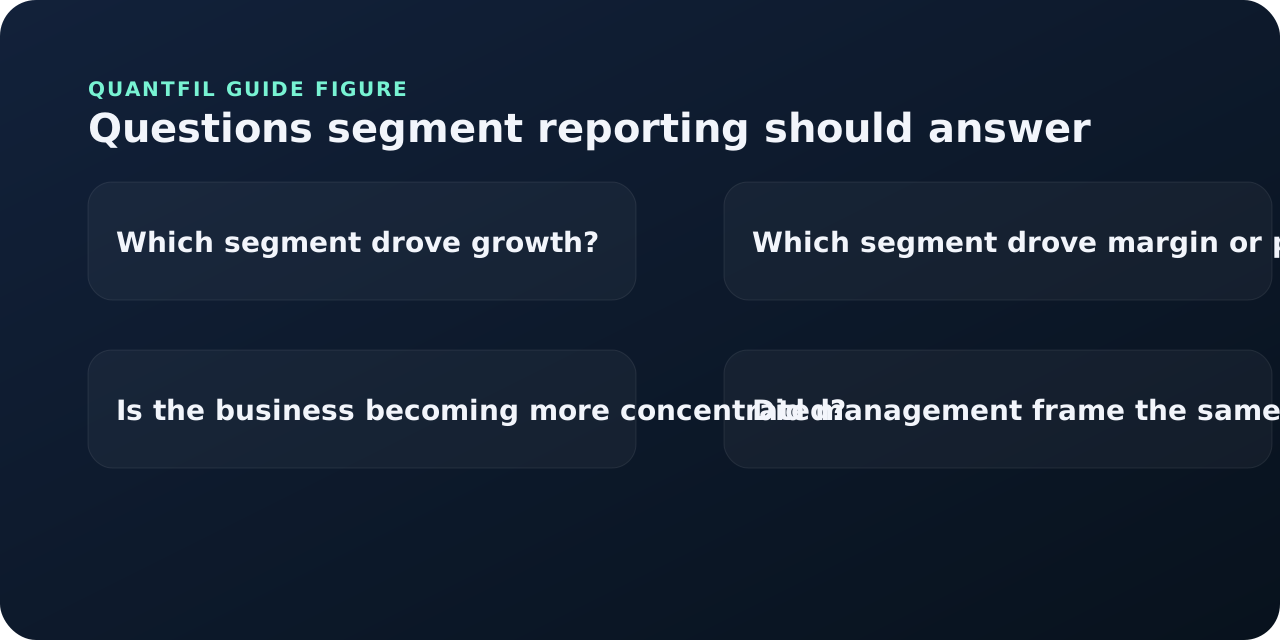
- Find the segment table or note.
- Identify which segment drove the main change.
- Compare segment performance with management's narrative.
- Decide whether the company became more balanced or more concentrated.
A practical workflow
Use segment reporting to localize the change. Once you know which part of the company drove the result, the rest of the filing becomes easier to interpret.
That workflow becomes easier to repeat when you write the next question down before moving on. The filing should not just be read. It should leave you with a sharper question than you had at the start.
Common mistakes
The common mistake is reading the consolidated results as if they describe every part of the company equally well. Segment reporting often shows that they do not.
A slower, more selective filing habit usually beats a faster but less structured one. In most cases the difference comes from knowing what you are trying to prove before you go hunting through the document.
How to use this on Quantfil
Quantfil is helpful when it frames the summary at a company level and then pushes the reader to ask which underlying business or segment is carrying that read.
Quantfil is most useful when the educational question comes first and the company page comes second. Learn the document, then use the filing page to apply that reading habit to a real report.
Try it on Quantfil
Move from the educational overview into live filing pages that show summaries, comparison cards, and source-linked context.
Frequently asked questions
Why does segment reporting matter?
Because it shows where the business result actually came from.
Can segment reporting change my view of the quarter?
Yes. It can show that a strong consolidated quarter depended on one business while another weakened.
What is one thing to watch for?
Increasing dependence on one segment can make the company look more fragile than the headline result suggests.
How does Quantfil help?
It helps you arrive at the segment question faster by organizing the broader filing read first.
Primary sources and further reading
Editorial note and disclosure
Quantfil publishes these guides for informational purposes only. They are designed to help readers understand filing structure, investor workflow, and source verification, not to offer investment advice or security recommendations.
If a guide looks stale, unclear, or incomplete, use the source links above and review our editorial standards, corrections policy, and editorial team page for how the site handles updates and accountability.