
Risk factors are easy to dismiss as boilerplate, but they often become useful when you compare the current language with the prior filing. Risk factors are often where a filing stops sounding polished and starts sounding legally cautious. That shift can be useful if you read it with discipline.
The risk section matters because it tells you what management and counsel are willing to put in writing about the threats facing the business. It does not predict the future, but it can reveal what the company feels forced to acknowledge. The goal is not to read more words than necessary. It is to read the right part of the filing in the right order.
- Risk factors are most useful when compared across filings.
- New wording or changed emphasis can matter more than the existence of a generic risk itself.
- The rest of the filing should be used to test whether the risk language looks consistent.
Why this matters
The risk section matters because it tells you what management and counsel are willing to put in writing about the threats facing the business. It does not predict the future, but it can reveal what the company feels forced to acknowledge.
Look for new risks, changed wording, reordered sections, and sharper language around topics like demand, regulation, supply chain, cyber incidents, or customer concentration. Then connect those changes back to the rest of the filing.
What to look for
Look for new risks, changed wording, reordered sections, and sharper language around topics like demand, regulation, supply chain, cyber incidents, or customer concentration. Then connect those changes back to the rest of the filing.
The best workflow is comparative. Read the current risk section, note what stands out, then compare it with the prior filing to see what management seems more eager or more reluctant to say now.
- Scan the current section for anything unusually specific.
- Compare with the prior filing for changes in wording or emphasis.
- Tie the risk back to the business and statement sections.
- Decide whether the risk changed the overall company read.
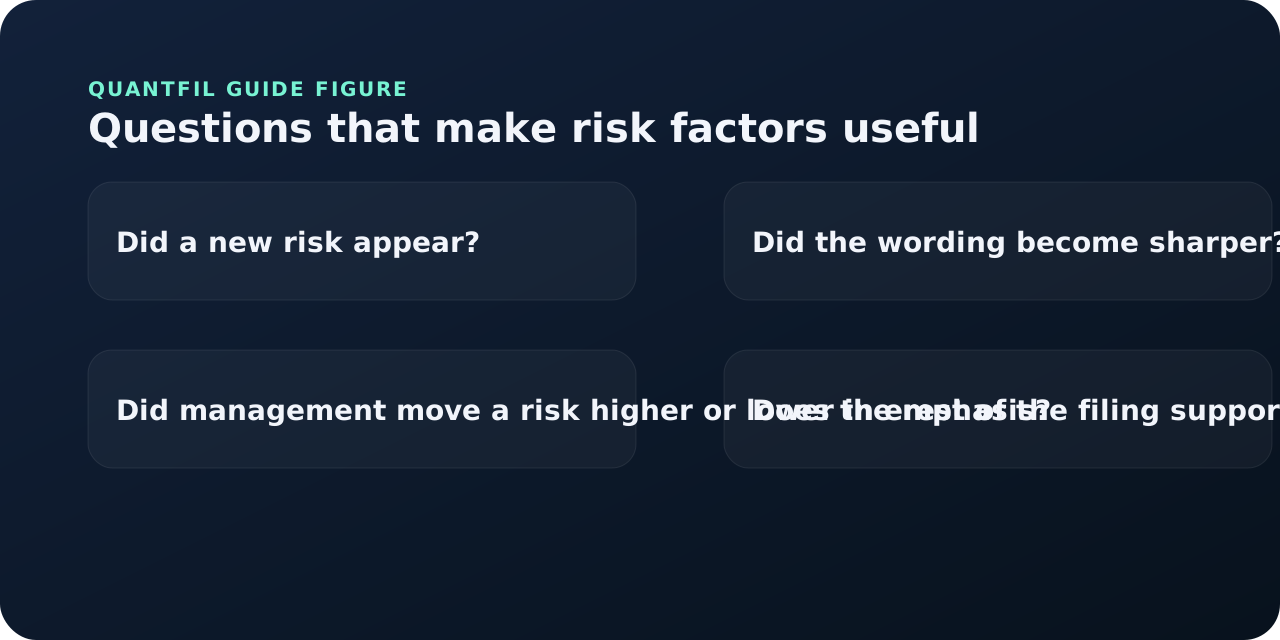
A practical workflow
The best workflow is comparative. Read the current risk section, note what stands out, then compare it with the prior filing to see what management seems more eager or more reluctant to say now.
That workflow becomes easier to repeat when you write the next question down before moving on. The filing should not just be read. It should leave you with a sharper question than you had at the start.
Common mistakes
The common mistake is reading risk factors as a one-time block of legal text. They become much more valuable when they are used as a change-detection tool instead.
A slower, more selective filing habit usually beats a faster but less structured one. In most cases the difference comes from knowing what you are trying to prove before you go hunting through the document.
How to use this on Quantfil
Quantfil helps by shortening the rest of the filing read, which gives you more room to spend time on the risk language that actually changed.
Quantfil is most useful when the educational question comes first and the company page comes second. Learn the document, then use the filing page to apply that reading habit to a real report.
Try it on Quantfil
Move from the educational overview into live filing pages that show summaries, comparison cards, and source-linked context.
Frequently asked questions
Are risk factors mostly boilerplate?
Some of the language is familiar, but changes in wording and emphasis can still be meaningful.
What kind of changes matter most?
New risks, sharper wording, or re-ordered emphasis often matter most.
Should a risk factor change automatically change my thesis?
Not automatically. It should change the questions you ask next.
How does Quantfil help here?
It helps you clear the rest of the filing faster so the risk section gets more deliberate attention.
Primary sources and further reading
Editorial note and disclosure
Quantfil publishes these guides for informational purposes only. They are designed to help readers understand filing structure, investor workflow, and source verification, not to offer investment advice or security recommendations.
If a guide looks stale, unclear, or incomplete, use the source links above and review our editorial standards, corrections policy, and editorial team page for how the site handles updates and accountability.