
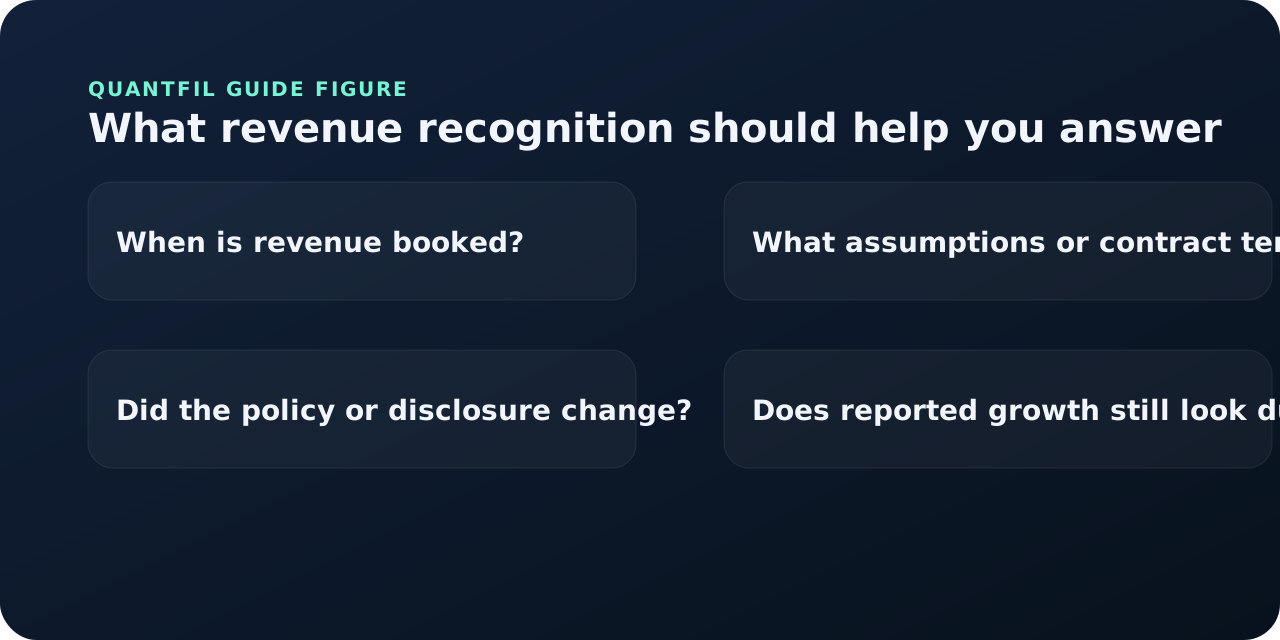
Revenue recognition is easy to ignore until a filing makes it obvious that timing, contract structure, or estimates are changing the shape of reported growth. Many investors read the top line without reading the accounting policy that shapes it. That shortcut is usually fine until the policy becomes a real part of the business story.
Revenue recognition matters because it helps you decide whether growth is straightforward, timing-sensitive, or dependent on judgments that deserve more skepticism. The policy note is often where the filing quietly tells you how clean or messy the sales model really is. The goal is not to read more words than necessary. It is to read the right part of the filing in the right order.
- Revenue recognition becomes important when timing, contract mix, or judgment can distort how growth is interpreted.
- The accounting policy note and the related revenue note should be read together.
- Changes in disclosure wording can signal a more important shift than the headline growth rate.
Why this matters
Revenue recognition matters because it helps you decide whether growth is straightforward, timing-sensitive, or dependent on judgments that deserve more skepticism. The policy note is often where the filing quietly tells you how clean or messy the sales model really is.
Look for how the company defines performance obligations, when control transfers, whether revenue is recognized over time or at a point in time, and whether deferred revenue or contract assets are becoming more important. Changes in this language often matter more than the existence of the policy itself.
What to look for
Look for how the company defines performance obligations, when control transfers, whether revenue is recognized over time or at a point in time, and whether deferred revenue or contract assets are becoming more important. Changes in this language often matter more than the existence of the policy itself.
Start with the accounting policy, then move into the note disclosures, then compare the current filing with the prior one. The goal is not to become an accountant. It is to understand whether the reported revenue trend is as simple as it looks.
- Read the revenue recognition policy note first.
- Check whether revenue is recognized over time or at a point in time.
- Compare the current disclosure with the prior filing.
- Use deferred revenue, contract assets, and segment detail to test the story.
A practical workflow
Start with the accounting policy, then move into the note disclosures, then compare the current filing with the prior one. The goal is not to become an accountant. It is to understand whether the reported revenue trend is as simple as it looks.
That workflow becomes easier to repeat when you write the next question down before moving on. The filing should not just be read. It should leave you with a sharper question than you had at the start.
Common mistakes
The common mistake is treating revenue recognition as background legal text. It becomes important precisely when the company has a business model, contract structure, or sales mix that makes timing less obvious than the headline suggests.
A slower, more selective filing habit usually beats a faster but less structured one. In most cases the difference comes from knowing what you are trying to prove before you go hunting through the document.
How to use this on Quantfil
Quantfil helps by shortening the first pass through the filing summary and the statement read, so you can spend more time on the accounting note when revenue quality is the real question.
Quantfil is most useful when the educational question comes first and the company page comes second. Learn the document, then use the filing page to apply that reading habit to a real report.
Try it on Quantfil
Move from the educational overview into live filing pages that show summaries, comparison cards, and source-linked context.
Frequently asked questions
Do all investors need to read revenue recognition notes?
Not always in depth, but they matter much more when the business model is subscription-based, project-based, or contract-heavy.
What is the fastest clue that revenue recognition deserves attention?
If the filing highlights deferred revenue, contract assets, remaining performance obligations, or a change in timing language, that is usually a sign.
Can revenue recognition change the growth read without changing cash?
Yes. Timing differences can change reported revenue before the cash picture fully changes.
How does Quantfil help?
It helps you narrow the filing to the right question faster so the accounting note gets attention only when it deserves it.
Primary sources and further reading
Editorial note and disclosure
Quantfil publishes these guides for informational purposes only. They are designed to help readers understand filing structure, investor workflow, and source verification, not to offer investment advice or security recommendations.
If a guide looks stale, unclear, or incomplete, use the source links above and review our editorial standards, corrections policy, and editorial team page for how the site handles updates and accountability.