
Footnotes are where a filing often becomes more specific. They turn headline numbers into accounting detail and sometimes change the meaning of the rest of the page. Many investors know the footnotes matter but still avoid them because they look technical. The practical fix is not to read every note. It is to read the note that answers the question the filing just raised.
Footnotes matter because they contain the accounting and disclosure detail that explains unusual charges, debt terms, stock compensation, segment detail, acquisitions, and other items the headline sections only summarize. The goal is not to read more words than necessary. It is to read the right part of the filing in the right order.
- Footnotes usually matter most when they answer a specific question raised by the filing.
- Debt, stock compensation, and unusual charges often need note-level context.
- A better footnote habit is targeted, not exhaustive.
Why this matters
Footnotes matter because they contain the accounting and disclosure detail that explains unusual charges, debt terms, stock compensation, segment detail, acquisitions, and other items the headline sections only summarize.
Go to the notes when the filing raises a question about accounting quality, unusual items, capital structure, or the true economics of a reported number. That is where the detail usually sits.
What to look for
Go to the notes when the filing raises a question about accounting quality, unusual items, capital structure, or the true economics of a reported number. That is where the detail usually sits.
Use the footnotes as a targeted research tool. First find the question, then find the note most likely to answer it, then return to the main filing with a clearer interpretation.
- Read the main filing and find the open question.
- Use the table of contents or note references to find the relevant note.
- Read only the accounting detail that addresses the question.
- Return to the filing and decide whether the note changed the read.
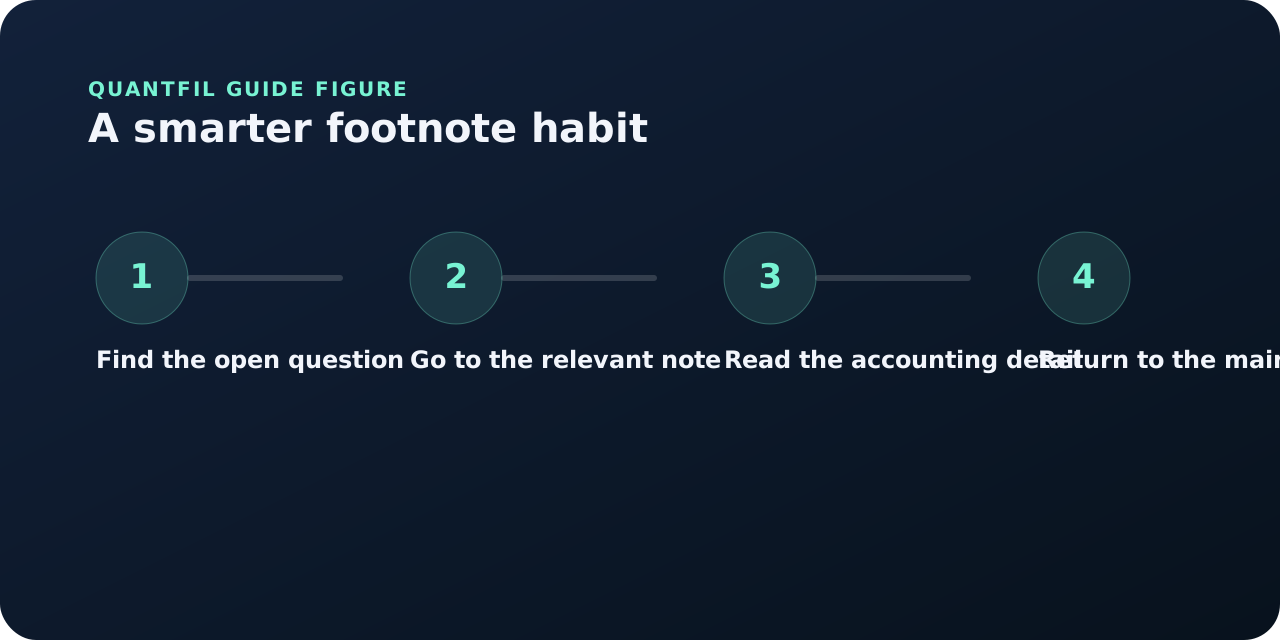
A practical workflow
Use the footnotes as a targeted research tool. First find the question, then find the note most likely to answer it, then return to the main filing with a clearer interpretation.
That workflow becomes easier to repeat when you write the next question down before moving on. The filing should not just be read. It should leave you with a sharper question than you had at the start.
Common mistakes
The common mistake is either skipping footnotes entirely or trying to read every note without a purpose. Both approaches waste time and reduce clarity.
A slower, more selective filing habit usually beats a faster but less structured one. In most cases the difference comes from knowing what you are trying to prove before you go hunting through the document.
How to use this on Quantfil
Quantfil can help create the question. Once the summary or comparison suggests a pressure point, the source filing footnote is often the right next stop.
Quantfil is most useful when the educational question comes first and the company page comes second. Learn the document, then use the filing page to apply that reading habit to a real report.
Try it on Quantfil
Move from the educational overview into live filing pages that show summaries, comparison cards, and source-linked context.
Frequently asked questions
Do I need to read every footnote?
No. The better approach is to read the note that answers the question the main filing raised.
What kinds of things hide in footnotes?
Debt terms, stock compensation, acquisitions, unusual charges, and accounting detail often sit there.
When should I open the footnotes?
When the headline section does not give enough detail to decide what a number or risk actually means.
How does Quantfil help?
It helps surface the questions that deserve a footnote read instead of a random deep dive.
Primary sources and further reading
Editorial note and disclosure
Quantfil publishes these guides for informational purposes only. They are designed to help readers understand filing structure, investor workflow, and source verification, not to offer investment advice or security recommendations.
If a guide looks stale, unclear, or incomplete, use the source links above and review our editorial standards, corrections policy, and editorial team page for how the site handles updates and accountability.