
Cash flow from operations is often where a filing stops sounding optimistic and starts sounding testable. Many filing reads improve immediately once the investor stops at cash flow from operations and asks whether the reported quarter or year actually turned into cash.
Cash flow from operations matters because it is often the fastest test of earnings quality. If reported profitability improves but operating cash flow weakens, the filing may be telling a more complicated story than the headline suggests. The goal is not to read more words than necessary. It is to read the right part of the filing in the right order.
- Cash flow from operations is often the fastest test of earnings quality.
- Working capital can change the operating cash read more than the headline suggests.
- A good quarter should usually make more sense after you read operating cash flow, not less.
Why this matters
Cash flow from operations matters because it is often the fastest test of earnings quality. If reported profitability improves but operating cash flow weakens, the filing may be telling a more complicated story than the headline suggests.
Look at the relationship between net income, non-cash adjustments, and working-capital movement. Receivables, inventory, payables, and deferred revenue can all change the read quickly.
What to look for
Look at the relationship between net income, non-cash adjustments, and working-capital movement. Receivables, inventory, payables, and deferred revenue can all change the read quickly.
Read cash flow from operations as a proof section. Start with net income, move through adjustments, then ask whether working capital supported or resisted the reported period.
- Start with net income.
- Check the non-cash adjustments.
- Review receivables, inventory, payables, and deferred revenue.
- Decide whether the cash picture supports the earnings story.
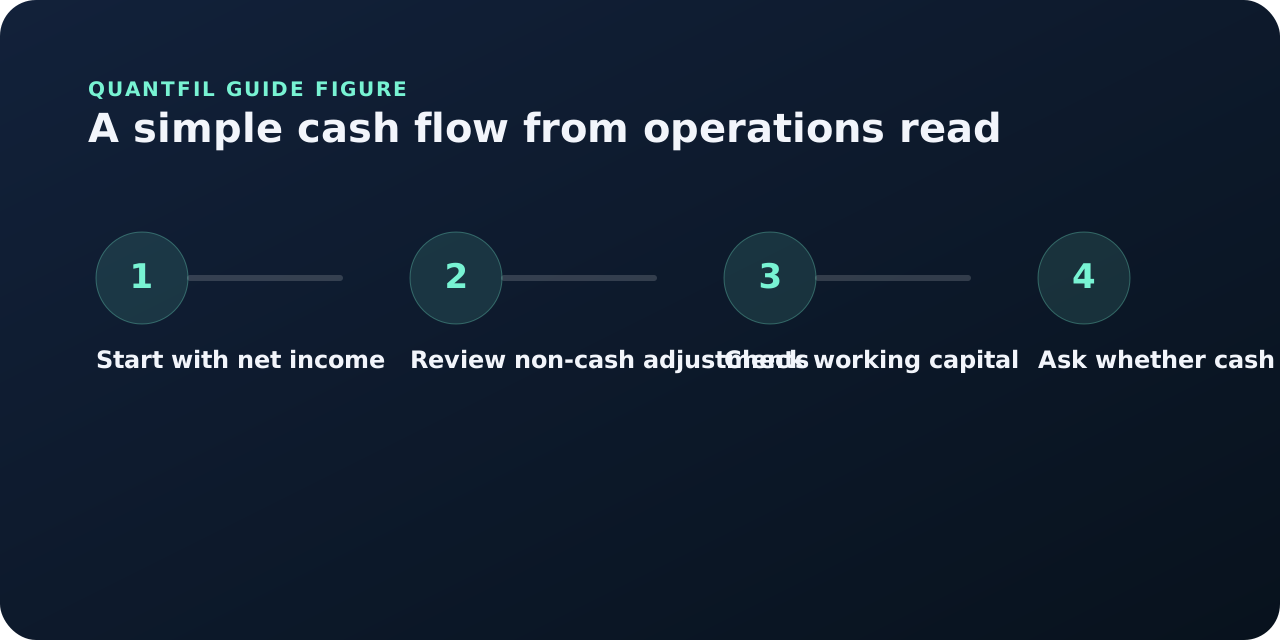
A practical workflow
Read cash flow from operations as a proof section. Start with net income, move through adjustments, then ask whether working capital supported or resisted the reported period.
That workflow becomes easier to repeat when you write the next question down before moving on. The filing should not just be read. It should leave you with a sharper question than you had at the start.
Common mistakes
The common mistake is looking only at free cash flow or only at net income and skipping the operating-cash bridge that explains how the company got there.
A slower, more selective filing habit usually beats a faster but less structured one. In most cases the difference comes from knowing what you are trying to prove before you go hunting through the document.
How to use this on Quantfil
Quantfil helps by surfacing earnings, operating cash flow, and balance-sheet movement close together, which makes mismatches easier to spot before the full source read.
Quantfil is most useful when the educational question comes first and the company page comes second. Learn the document, then use the filing page to apply that reading habit to a real report.
Try it on Quantfil
Move from the educational overview into live filing pages that show summaries, comparison cards, and source-linked context.
Frequently asked questions
Is cash flow from operations the same as free cash flow?
No. Free cash flow usually subtracts capital spending after cash flow from operations.
Why can operating cash flow diverge from earnings?
Working capital and non-cash items can make cash behavior look very different from accounting earnings.
What is the most important line to watch?
There is no single line, but large working-capital swings usually deserve careful review.
How does Quantfil help?
It helps put operating cash flow next to the rest of the filing summary so the mismatch is harder to miss.
Primary sources and further reading
Editorial note and disclosure
Quantfil publishes these guides for informational purposes only. They are designed to help readers understand filing structure, investor workflow, and source verification, not to offer investment advice or security recommendations.
If a guide looks stale, unclear, or incomplete, use the source links above and review our editorial standards, corrections policy, and editorial team page for how the site handles updates and accountability.