
A 10-Q is not just a shorter 10-K. It is the filing most useful for spotting what changed in the business since the last report. Quarterly filings matter because markets often settle on a headline before the filing is actually read. The 10-Q is where you can test whether that headline deserves confidence.
A 10-Q matters because it shows direction. Revenue acceleration, margin pressure, working-capital shifts, and changes in management tone often surface here before the full-year story becomes obvious. The goal is not to read more words than necessary. It is to read the right part of the filing in the right order.
- A 10-Q is best used to detect change, not to restate what you already know about the company.
- Compare the current quarter with both the prior quarter and the prior-year quarter.
- If revenue, margin, and cash flow point in different directions, the filing deserves more work.
Why this matters
A 10-Q matters because it shows direction. Revenue acceleration, margin pressure, working-capital shifts, and changes in management tone often surface here before the full-year story becomes obvious.
The first read should focus on what moved relative to the prior quarter and the prior-year quarter. Look for places where revenue, margins, cash flow, and balance-sheet behavior tell the same story or clearly diverge.
What to look for
The first read should focus on what moved relative to the prior quarter and the prior-year quarter. Look for places where revenue, margins, cash flow, and balance-sheet behavior tell the same story or clearly diverge.
Use the 10-Q as a structured comparison exercise. Read the current filing, mark the metrics that changed, then compare those changes with management's explanation and the prior report.
- Read the current quarter first.
- Check the prior quarter and prior-year quarter.
- Use the statements to verify the narrative.
- Write down the one or two questions the filing still leaves open.
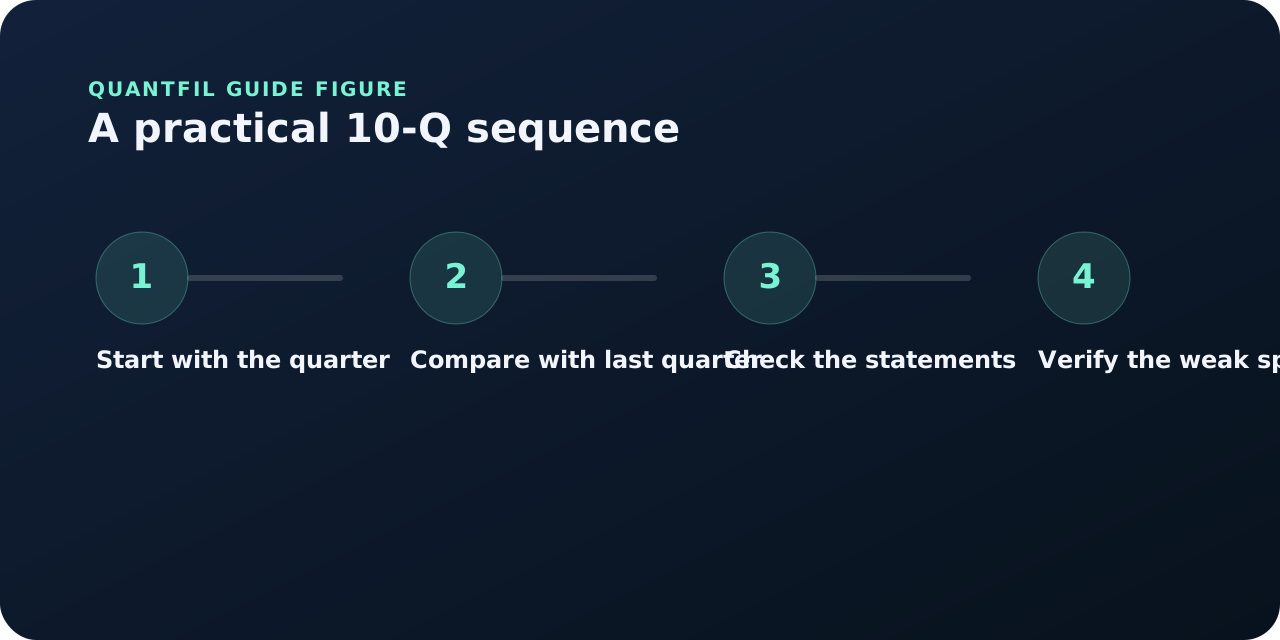
A practical workflow
Use the 10-Q as a structured comparison exercise. Read the current filing, mark the metrics that changed, then compare those changes with management's explanation and the prior report.
That workflow becomes easier to repeat when you write the next question down before moving on. The filing should not just be read. It should leave you with a sharper question than you had at the start.
Common mistakes
The common mistake is treating a 10-Q as a miniature annual report and reading it too broadly. It is usually more useful to focus narrowly on change, consistency, and whether the quarter really altered the business read.
A slower, more selective filing habit usually beats a faster but less structured one. In most cases the difference comes from knowing what you are trying to prove before you go hunting through the document.
How to use this on Quantfil
On Quantfil, this workflow fits naturally with the filing summary, the current-versus-prior comparison cards, and the statement sections. Those pages are strongest when they tell you where the quarter deserves a slower source read.
Quantfil is most useful when the educational question comes first and the company page comes second. Learn the document, then use the filing page to apply that reading habit to a real report.
Try it on Quantfil
Move from the educational overview into live filing pages that show summaries, comparison cards, and source-linked context.
Frequently asked questions
Is a 10-Q less important than a 10-K?
No. It answers a different question. A 10-Q is often the better document for seeing what changed recently.
Should I compare a 10-Q with the previous 10-Q or the same quarter last year?
Usually both. One comparison shows recent change, while the other helps you separate seasonality from a real business shift.
What if the quarter looks good but cash flow is weak?
That is exactly the kind of mismatch the filing should help you investigate more carefully.
How does Quantfil help with this?
Quantfil helps surface the first set of changes so the source filing can be used more selectively and with better questions in mind.
Primary sources and further reading
Editorial note and disclosure
Quantfil publishes these guides for informational purposes only. They are designed to help readers understand filing structure, investor workflow, and source verification, not to offer investment advice or security recommendations.
If a guide looks stale, unclear, or incomplete, use the source links above and review our editorial standards, corrections policy, and editorial team page for how the site handles updates and accountability.