
Stock-based compensation is easy to wave away as a non-cash item, but it can still change how attractive a business looks to long-term owners. Investors often know stock-based compensation matters, but they are not always sure where to look for it or how to connect it back to dilution and capital allocation.
Stock-based compensation matters because it can make earnings look cleaner than owner economics actually are. It affects reported expenses, share count, and sometimes the real purpose of buybacks. The goal is not to read more words than necessary. It is to read the right part of the filing in the right order.
- Stock-based compensation is not harmless just because it is non-cash.
- The important read combines expense, dilution, and repurchase behavior.
- A large buyback program can be less generous than it looks if it mainly offsets dilution.
Why this matters
Stock-based compensation matters because it can make earnings look cleaner than owner economics actually are. It affects reported expenses, share count, and sometimes the real purpose of buybacks.
Look for the stock-based compensation expense in the statements and notes, then compare that with diluted share count, repurchases, and management language about capital returns. The real question is whether the business is genuinely returning capital or merely standing still against dilution.
What to look for
Look for the stock-based compensation expense in the statements and notes, then compare that with diluted share count, repurchases, and management language about capital returns. The real question is whether the business is genuinely returning capital or merely standing still against dilution.
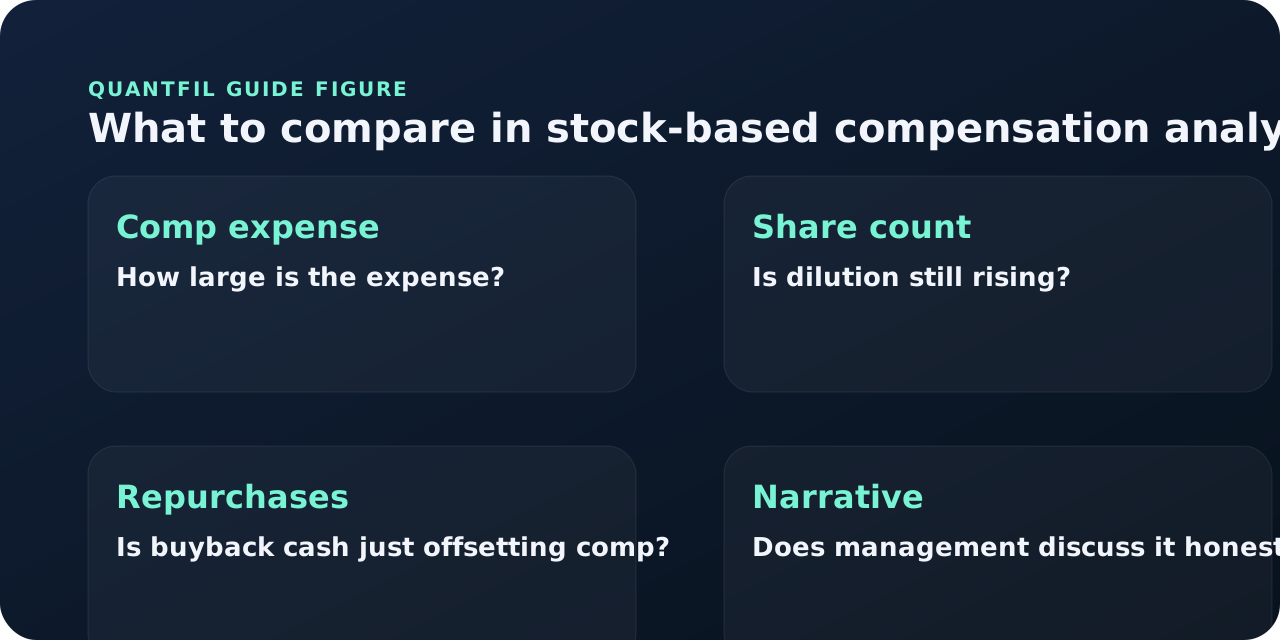
Read the expense note, then the share-count trend, then the cash uses around repurchases. If those three pieces line up, the read becomes clearer. If they do not, the filing deserves more skepticism.
- Find the stock-based compensation note.
- Check diluted share count over time.
- Compare buyback cash with dilution offset needs.
- Decide whether owner economics still look attractive.
A practical workflow
Read the expense note, then the share-count trend, then the cash uses around repurchases. If those three pieces line up, the read becomes clearer. If they do not, the filing deserves more skepticism.
That workflow becomes easier to repeat when you write the next question down before moving on. The filing should not just be read. It should leave you with a sharper question than you had at the start.
Common mistakes
The common mistake is dismissing stock-based compensation because it is non-cash. The better question is whether it is still economically expensive to owners once dilution and buyback usage are considered.
A slower, more selective filing habit usually beats a faster but less structured one. In most cases the difference comes from knowing what you are trying to prove before you go hunting through the document.
How to use this on Quantfil
Quantfil can help identify when the earnings read looks clean at first glance but deserves a second pass through dilution, repurchases, and the footnotes.
Quantfil is most useful when the educational question comes first and the company page comes second. Learn the document, then use the filing page to apply that reading habit to a real report.
Try it on Quantfil
Move from the educational overview into live filing pages that show summaries, comparison cards, and source-linked context.
Frequently asked questions
Is stock-based compensation always bad?
No. It depends on scale, growth quality, and whether dilution remains controlled.
Why compare it with buybacks?
Because buybacks can create less real owner benefit when much of the cash simply offsets issuance.
Where does the real signal show up?
Usually in the notes, diluted share count, and the company’s capital allocation discussion.
How does Quantfil help?
It helps surface the broader earnings and cash-flow picture so dilution questions show up faster.
Primary sources and further reading
Editorial note and disclosure
Quantfil publishes these guides for informational purposes only. They are designed to help readers understand filing structure, investor workflow, and source verification, not to offer investment advice or security recommendations.
If a guide looks stale, unclear, or incomplete, use the source links above and review our editorial standards, corrections policy, and editorial team page for how the site handles updates and accountability.