
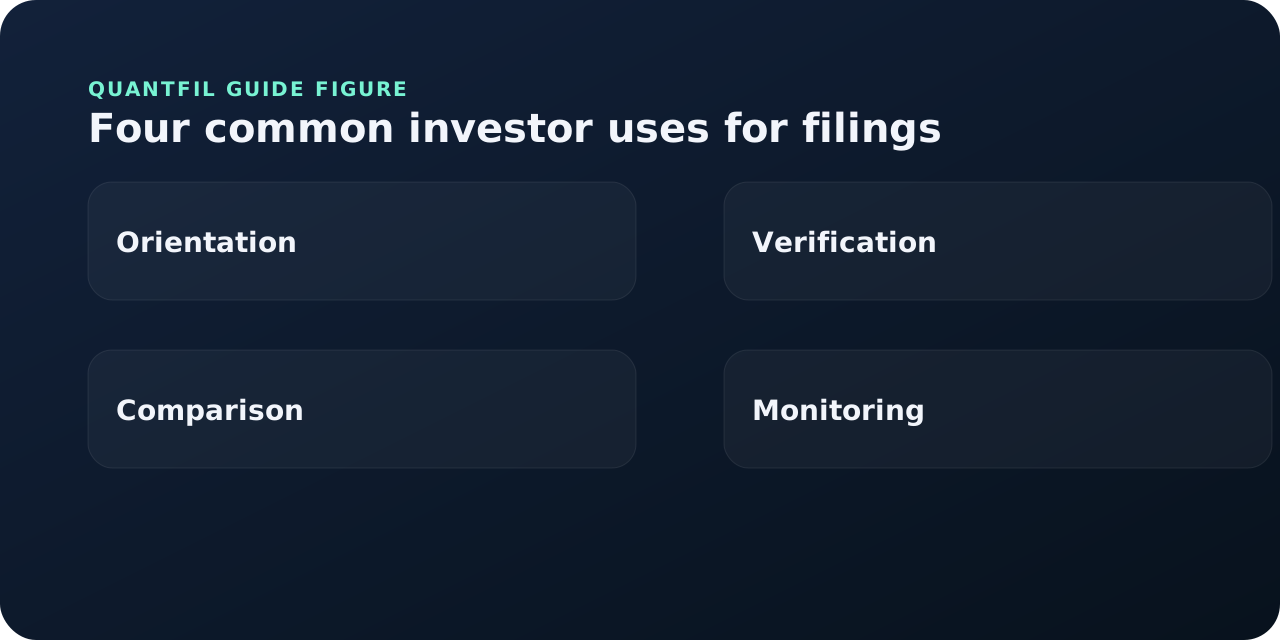
SEC filings are not just compliance documents. Investors use them as working tools. A filing can help you learn the business, verify a market narrative, compare one report with the prior one, or monitor whether a thesis is strengthening or weakening over time. The filing becomes valuable when it is tied to a job.
That job depends on the user. Beginners often use filings for orientation: what does the company do, where does it make money, and what are the major risks? More advanced readers often use them for verification and comparison: did management’s explanation hold up, and what actually changed from the last filing? Quantfil is built around those same use cases.
- Investors use filings for orientation, verification, comparison, and monitoring.
- The value of a filing depends on the question you bring to it.
- Quantfil is most useful when it helps you identify the right next source question.
Use filings to understand the business
The first investor use case is orientation. If you are new to a company, the filing is one of the best ways to learn what it actually does, which segments matter, what risks management sees, and how the recent operating picture looks. That is usually a better starting point than market commentary because it forces the company to explain itself in a more structured way.
This use case is where the 10-K shines most. It provides the business description, risk factors, MD&A, and financial statements in one place. A strong orientation read should leave you with a better mental model of the company, not just a list of numbers.
Use filings to verify the narrative
The second use case is verification. Earnings releases, interviews, headlines, and social commentary often reduce a company to a simple story. The filing lets you test whether that story holds up. If the market says a quarter was clean, did margins, operating income, and cash flow agree? If management says demand stayed strong, did the statements and risk section support that claim?
This is where disciplined filing use becomes powerful. The filing is not automatically right just because it is official, but it is the best place to verify what was disclosed. Investors who rely on summaries without this source check often end up with confident but fragile conclusions.
Use filings to compare one period with another
The third use case is comparison. A single filing is informative, but two filings are often far more useful. Comparing the latest 10-Q with the prior quarter or the latest 10-K with the prior annual filing can reveal where management language changed, where risk disclosure expanded, where margins improved, and where liquidity or capital allocation shifted.
That is one of the reasons Quantfil focuses so heavily on current-versus-prior framing. Comparison is how you avoid being fooled by isolated numbers. A good comparison changes the read from 'the company reported X' to 'the business appears stronger or weaker than it was last time.'
Use filings to monitor a thesis over time
The fourth use case is monitoring. Once you already understand a company, filings become checkpoints. You are no longer asking what the business does. You are asking whether the facts still support your view. That might mean watching gross margin, capital spending, debt, buybacks, working capital, or the tone around demand and competition.
Filings are especially useful here because they make it harder to ignore change. A thesis can survive a rough quarter, but the filing tells you whether the rough quarter is noise, a mix shift, or a deeper structural problem. That is where ongoing research becomes much more disciplined.
How this investor workflow maps to Quantfil
Quantfil is built to support all four of those jobs. The filing summary helps with orientation. The statement sections and SEC links support verification. The comparison cards support period-over-period work. The evolving coverage set and filing pages support monitoring. The platform should not replace the filing. It should make the filing more usable by helping readers decide where to slow down and why.
A practical example is to open Apple's or Microsoft's filing page on Quantfil, identify the operating read, compare it with the prior filing, and then move into the source document only where the conclusion needs verification. That is a better workflow than relying on a generic recap or reading EDGAR without a plan.
Try it on Quantfil
Move from the educational overview into live filing pages that show summaries, comparison cards, and source-linked context.
Frequently asked questions
Do professional investors really rely on filings this much?
Yes. Even when they use many tools, filings remain one of the best sources for understanding what was actually disclosed.
Which filing is best for monitoring a thesis?
It depends. 10-Ks are best for full-year reassessment, 10-Qs are best for change detection, and 8-Ks are best for material events between reports.
Why compare filings instead of just reading the latest one?
Comparison is how you see what changed in tone, risk, margins, and capital structure.
How does Quantfil fit into this workflow?
Quantfil helps structure the first pass so you can use the filing more deliberately and verify the parts that matter.
Primary sources and further reading
Editorial note and disclosure
Quantfil publishes these guides for informational purposes only. They are designed to help readers understand filing structure, investor workflow, and source verification, not to offer investment advice or security recommendations.
If a guide looks stale, unclear, or incomplete, use the source links above and review our editorial standards, corrections policy, and editorial team page for how the site handles updates and accountability.