
The earnings release is not the end of the analysis. It is the start of a verification job. The better workflow is to use the release to identify the company's preferred story, then use the filing to decide whether the story actually holds up. A lot of weak investing habits start with treating the release as complete. The release is usually short, selective, and presentation-friendly. That is exactly why it needs the filing behind it.
This workflow matters because it teaches the difference between a reported headline and a verified conclusion. That is one of the most useful habits a filing-first investor can build. The goal is not to read more words than necessary. It is to read the right part of the filing in the right order.
- The release explains what management wants highlighted.
- The filing explains whether the story is supported by fuller disclosure.
- The best post-earnings question is usually not what the number was, but what the number hides.
Why this matters
This workflow matters because it teaches the difference between a reported headline and a verified conclusion. That is one of the most useful habits a filing-first investor can build.
Look for the company's main claim about demand, margin, cash generation, guidance, or product momentum. Then use the filing to test whether the statements, risk updates, and notes support the same claim.
What to look for
Look for the company's main claim about demand, margin, cash generation, guidance, or product momentum. Then use the filing to test whether the statements, risk updates, and notes support the same claim.
Use the earnings release as the narrative prompt, then use the filing to ask whether the quality of revenue, margins, cash flow, and balance sheet movement really support the narrative.
- Read the earnings release and write down the one or two claims management wants investors to leave with.
- Open the filing and test those claims against margins, cash flow, risk updates, and note disclosure.
- Look for what was emphasized in the release but qualified in the filing.
- Update the watchlist for the next quarter based on what still feels unresolved.
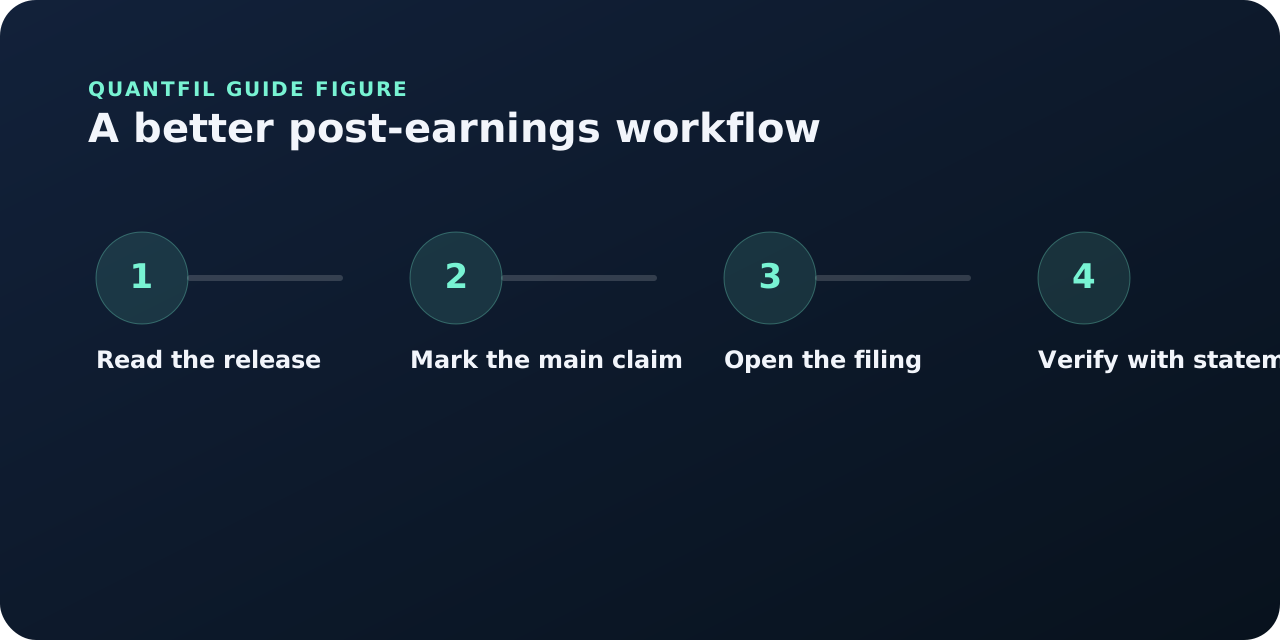
A practical workflow
Use the earnings release as the narrative prompt, then use the filing to ask whether the quality of revenue, margins, cash flow, and balance sheet movement really support the narrative.
That workflow becomes easier to repeat when you write the next question down before moving on. The filing should not just be read. It should leave you with a sharper question than you had at the start.
Common mistakes
The common mistake is to let a beat or a miss substitute for analysis. The better habit is to ask what the release wants you to believe and what the filing forces you to verify.
A slower, more selective filing habit usually beats a faster but less structured one. In most cases the difference comes from knowing what you are trying to prove before you go hunting through the document.
How to use this on Quantfil
Quantfil is especially useful in this workflow because the filing summary helps you bridge the gap between the headline release and the harder filing questions that follow.
Quantfil is most useful when the educational question comes first and the company page comes second. Learn the document, then use the filing page to apply that reading habit to a real report.
Ask yourself
Try it on Quantfil
Move from the educational overview into live filing pages that show summaries, comparison cards, and source-linked context.
Try the next workflow
Use one of these next-step pages if you want to turn the concept into a repeatable habit on a live filing, earnings setup, or company comparison task.
Frequently asked questions
Should the filing always change the release read?
Not always, but it should at least sharpen the confidence level of the release read.
What if the filing is not out yet?
Then the best move is to write down the release claim and know exactly what you want the filing to confirm once it arrives.
Does this matter for large-cap names too?
Yes. Large caps often have cleaner releases, but the filing still does the important work of adding statement and footnote depth.
How does Quantfil help?
It helps you move from the release headline into a filing summary that is already organized around what changed and what needs verification.
Primary sources and further reading
Editorial note and disclosure
Quantfil publishes these guides for informational purposes only. They are designed to help readers understand filing structure, investor workflow, and source verification, not to offer investment advice or security recommendations.
If a guide looks stale, unclear, or incomplete, use the source links above and review our editorial standards, corrections policy, and editorial team page for how the site handles updates and accountability.