
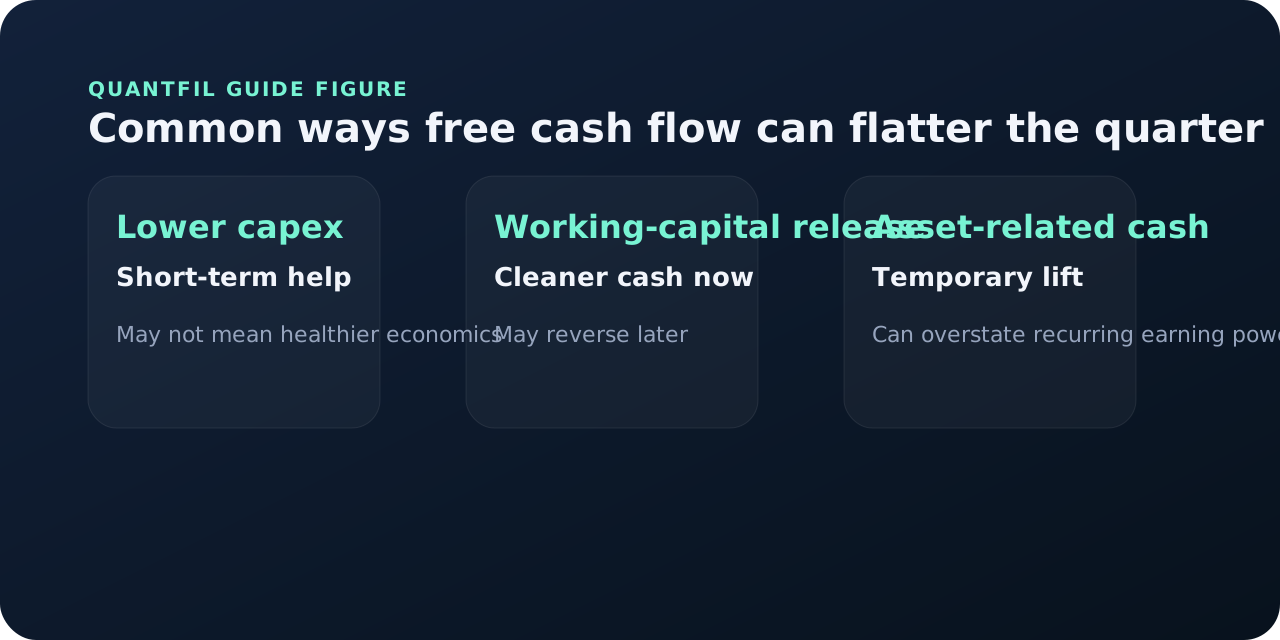
Free cash flow can be one of the best investor metrics on the page, but it can also be flattering for reasons that do not improve the long-term economics of the business. Timing, underinvestment, working-capital swings, and asset sales can all make the number look cleaner than the underlying period really was. Free cash flow is attractive because it sounds final. Cash after capital spending feels like a hard reality check. It often is. But the path into that number still matters.
This matters because investors often use free cash flow as a tie-breaker between a clean and a questionable quarter. If the cash number itself is low quality, the whole read can tilt the wrong way. The goal is not to read more words than necessary. It is to read the right part of the filing in the right order.
- Free cash flow is useful, but the route into it matters.
- Capex timing and working capital can both flatter the number.
- The most useful question is whether the cash number made the business sturdier or just the period smoother.
Why this matters
This matters because investors often use free cash flow as a tie-breaker between a clean and a questionable quarter. If the cash number itself is low quality, the whole read can tilt the wrong way.
Look at the quality of operating cash flow, the level and timing of capex, any unusual cash inflow, and whether the quarter's cash generation would still look strong in a more normal investment cycle.
What to look for
Look at the quality of operating cash flow, the level and timing of capex, any unusual cash inflow, and whether the quarter's cash generation would still look strong in a more normal investment cycle.
Use free cash flow as a confirmation tool, not as a magic override. Ask whether the cash number was generated in a way that strengthens the future or merely borrows from it.
- Start with operating cash flow.
- Check what changed in capex versus the prior period.
- Review working-capital and unusual cash items.
- Decide whether the free-cash-flow strength looks durable or temporary.
A practical workflow
Use free cash flow as a confirmation tool, not as a magic override. Ask whether the cash number was generated in a way that strengthens the future or merely borrows from it.
That workflow becomes easier to repeat when you write the next question down before moving on. The filing should not just be read. It should leave you with a sharper question than you had at the start.
Common mistakes
The common mistake is seeing strong free cash flow and assuming the underlying business got stronger. Sometimes the cash improved because the company postponed spending or benefited from timing that will not repeat.
A slower, more selective filing habit usually beats a faster but less structured one. In most cases the difference comes from knowing what you are trying to prove before you go hunting through the document.
How to use this on Quantfil
Quantfil helps because the filing summary can surface when cash flow confirms the narrative and when it deserves a more skeptical read through capex and working-capital context.
Quantfil is most useful when the educational question comes first and the company page comes second. Learn the document, then use the filing page to apply that reading habit to a real report.
Ask yourself
Try it on Quantfil
Move from the educational overview into live filing pages that show summaries, comparison cards, and source-linked context.
Try the next workflow
Use one of these next-step pages if you want to turn the concept into a repeatable habit on a live filing, earnings setup, or company comparison task.
Frequently asked questions
Is free cash flow still a good metric?
Yes. The goal is not to discard it, but to understand what made it strong or weak.
Why can low capex be a problem?
Because lower spending can make free cash flow look better in the short run while weakening the future operating picture.
What should I compare free cash flow against?
Operating cash flow, capex history, and the broader investment needs of the business are all useful comparisons.
How does Quantfil help?
It helps connect the cash number with the rest of the filing so the reader can judge the quality of the cash more calmly.
Primary sources and further reading
Editorial note and disclosure
Quantfil publishes these guides for informational purposes only. They are designed to help readers understand filing structure, investor workflow, and source verification, not to offer investment advice or security recommendations.
If a guide looks stale, unclear, or incomplete, use the source links above and review our editorial standards, corrections policy, and editorial team page for how the site handles updates and accountability.