
Cash flow often decides whether a quarter or year looks durable. The most useful signals are not mysterious. They are the recurring patterns that tell you whether earnings translated into cash, whether working capital behaved, and whether investment spending supports or strains the operating story. A lot of filing reads become clearer once cash flow is treated as the confirmation layer. The question is not simply whether cash flow is positive. It is whether the cash pattern makes the rest of the filing more believable.
This matters because investors often need a quick way to decide whether the quarter got stronger in a durable way. Cash-flow signals can do that job better than many headline metrics. The goal is not to read more words than necessary. It is to read the right part of the filing in the right order.
- Cash flow is most useful when it confirms or weakens a specific claim from the filing.
- Working capital and capex often determine the quality of the cash read.
- A strong cash-flow signal is one that makes the next quarter easier to trust.
Why this matters
This matters because investors often need a quick way to decide whether the quarter got stronger in a durable way. Cash-flow signals can do that job better than many headline metrics.
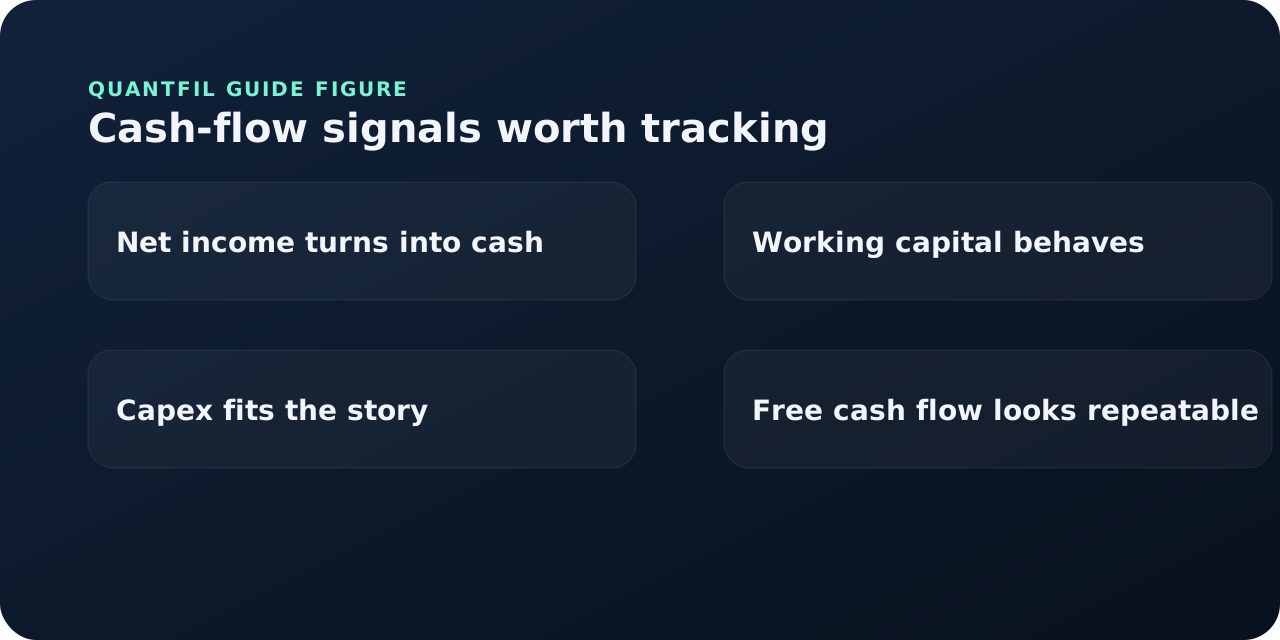
Look for earnings-to-cash conversion, the direction of receivables, inventory and payables, the level and purpose of capital spending, and whether the resulting free cash flow feels repeatable or borrowed from timing.
What to look for
Look for earnings-to-cash conversion, the direction of receivables, inventory and payables, the level and purpose of capital spending, and whether the resulting free cash flow feels repeatable or borrowed from timing.
Use cash flow as the proof layer. Once you know what the quarter claims, ask which cash pattern would confirm it and which one would weaken it.
- Write down the quarter's main claim.
- Choose the cash-flow signal that should support that claim.
- Check working capital and capex around the cash figure.
- Decide whether the cash pattern confirms the filing or keeps the read tentative.
A practical workflow
Use cash flow as the proof layer. Once you know what the quarter claims, ask which cash pattern would confirm it and which one would weaken it.
That workflow becomes easier to repeat when you write the next question down before moving on. The filing should not just be read. It should leave you with a sharper question than you had at the start.
Common mistakes
The common mistake is to treat cash flow as a secondary detail after the quarter already looks good. It is often the part that decides whether the good quarter deserves trust.
A slower, more selective filing habit usually beats a faster but less structured one. In most cases the difference comes from knowing what you are trying to prove before you go hunting through the document.
How to use this on Quantfil
Quantfil helps because it keeps the filing summary, statement view, and comparison work close together, making it easier to decide whether the cash pattern matches the narrative.
Quantfil is most useful when the educational question comes first and the company page comes second. Learn the document, then use the filing page to apply that reading habit to a real report.
Ask yourself
Try it on Quantfil
Move from the educational overview into live filing pages that show summaries, comparison cards, and source-linked context.
Try the next workflow
Use one of these next-step pages if you want to turn the concept into a repeatable habit on a live filing, earnings setup, or company comparison task.
Frequently asked questions
Is cash flow always a better metric than earnings?
Not automatically. It is often a better confirmation layer, but it still needs context around capex and working capital.
What is one especially useful signal?
When operating cash flow, margin, and working-capital behavior all support the same business story, confidence usually improves.
Can cash flow be flattering too?
Yes. Timing, working capital, and capex can all make the cash read cleaner than the underlying economics.
How does Quantfil help?
It helps connect cash flow to the broader filing read so the signal is interpreted in context.
Primary sources and further reading
Editorial note and disclosure
Quantfil publishes these guides for informational purposes only. They are designed to help readers understand filing structure, investor workflow, and source verification, not to offer investment advice or security recommendations.
If a guide looks stale, unclear, or incomplete, use the source links above and review our editorial standards, corrections policy, and editorial team page for how the site handles updates and accountability.