
An 8-K is the filing companies use to report important events between periodic reports. It often matters because it arrives before the next 10-Q or 10-K. A lot of investors know what a 10-K or 10-Q is but still underuse 8-Ks. That is a mistake, because the most important change in a company story often appears in an event filing first.
An 8-K matters because it reports something material between scheduled periodic filings. That could involve leadership changes, guidance, acquisitions, financing, legal matters, or other events that change the read before the next quarter arrives. The goal is not to read more words than necessary. It is to read the right part of the filing in the right order.
- An 8-K reports important events between periodic filings.
- The filing item and exhibit usually tell you where the real detail sits.
- A useful 8-K read asks how the event changes the next filing question.
Why this matters
An 8-K matters because it reports something material between scheduled periodic filings. That could involve leadership changes, guidance, acquisitions, financing, legal matters, or other events that change the read before the next quarter arrives.
The first question is simple: what actually happened? The second is harder: does that event change the way the next 10-Q or 10-K should be read? The best 8-K habit is to connect the event to the next filing question immediately.
What to look for
The first question is simple: what actually happened? The second is harder: does that event change the way the next 10-Q or 10-K should be read? The best 8-K habit is to connect the event to the next filing question immediately.
Use the item number and exhibit to figure out what is being disclosed, then decide whether the event affects demand, margins, capital structure, risk, or management credibility.
- Identify the event and why it was filed now.
- Find the item number that governs the disclosure.
- Read the attached exhibit or release.
- Write down what the next periodic filing now needs to confirm.
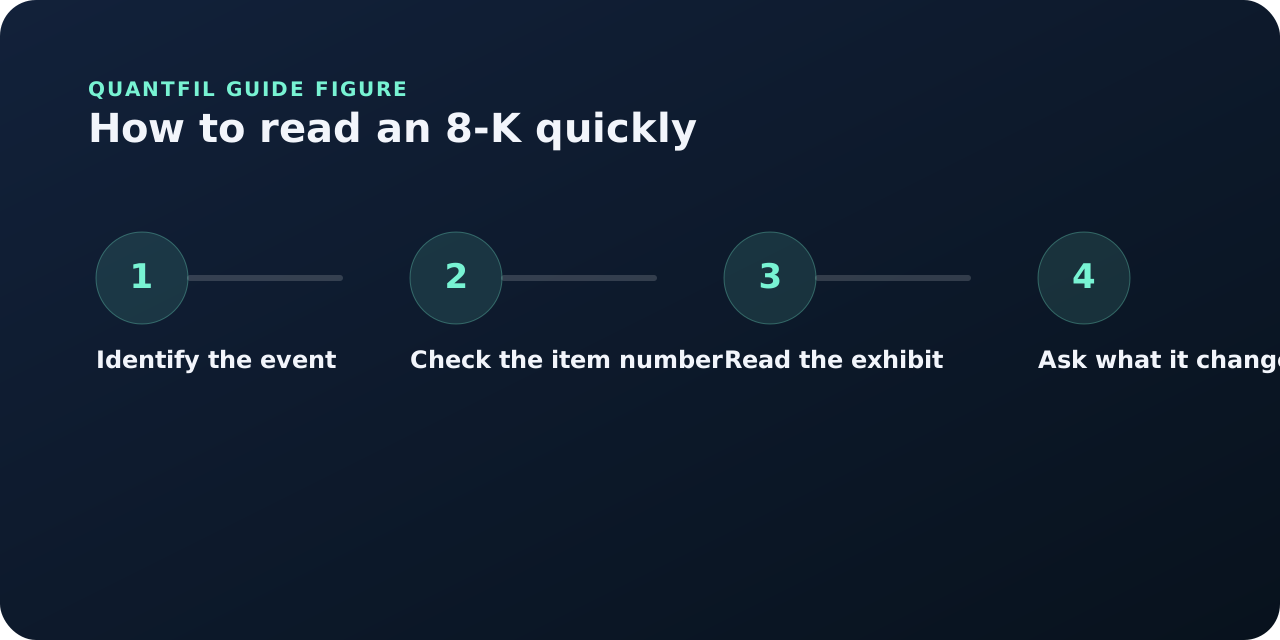
A practical workflow
Use the item number and exhibit to figure out what is being disclosed, then decide whether the event affects demand, margins, capital structure, risk, or management credibility.
That workflow becomes easier to repeat when you write the next question down before moving on. The filing should not just be read. It should leave you with a sharper question than you had at the start.
Common mistakes
The common mistake is treating every 8-K as equally important. Some are housekeeping. Others change the entire next filing read. The work is to tell the difference early.
A slower, more selective filing habit usually beats a faster but less structured one. In most cases the difference comes from knowing what you are trying to prove before you go hunting through the document.
How to use this on Quantfil
On Quantfil, the 8-K mindset matters because it helps readers prepare for the next filing rather than waiting for the periodic report to explain a change that was already visible.
Quantfil is most useful when the educational question comes first and the company page comes second. Learn the document, then use the filing page to apply that reading habit to a real report.
Try it on Quantfil
Move from the educational overview into live filing pages that show summaries, comparison cards, and source-linked context.
Frequently asked questions
Is an 8-K less important than a 10-Q?
Not necessarily. It is narrower, but it can be more urgent because it reports a material event between quarters.
What kinds of events appear on 8-Ks?
Leadership changes, acquisitions, financing, legal matters, guidance updates, and other material developments can all appear on 8-Ks.
Should I read the exhibit too?
Usually yes, because the exhibit often carries the detail that gives the filing its meaning.
How does this help on Quantfil?
It helps you connect event-driven disclosures with the next filing or earnings page you plan to read.
Primary sources and further reading
Editorial note and disclosure
Quantfil publishes these guides for informational purposes only. They are designed to help readers understand filing structure, investor workflow, and source verification, not to offer investment advice or security recommendations.
If a guide looks stale, unclear, or incomplete, use the source links above and review our editorial standards, corrections policy, and editorial team page for how the site handles updates and accountability.