
If you want to understand a public company beyond a headline quarter, the 10-K is one of the most useful documents you can read. It is an annual filing that gives investors a fuller picture of the business than a press release or a market recap ever can. A good 10-K read tells you what the company says it does, where it makes money, what risks management is willing to disclose, and how the last fiscal year actually looked in the numbers.
That matters because many market summaries compress a company into one revenue number, one EPS number, and one narrative. The 10-K usually shows whether that narrative deserves trust. It gives you the company description, the risk section, management discussion and analysis, audited financial statements, and exhibits in one place. For a mixed audience, the simplest way to think about the filing is this: the 10-K is the annual operating and financial map of the business.
- A 10-K is the annual SEC filing that provides the company’s full-year operating and financial picture.
- The most useful sections for most readers are Business, Risk Factors, MD&A, and the audited financial statements.
- Use the filing to understand the business model first, then test whether margins, cash flow, and balance-sheet movement support the story.
Why a 10-K matters
A 10-K matters because it is one of the few public documents where management has to explain the business, not just celebrate the quarter. It is filed under SEC rules, it follows a recognized structure, and it usually contains more detail than the annual report a company markets to shareholders. That makes it a far better tool for understanding business quality, capital allocation, and risk.
For newer readers, the value is clarity. You can see what products and segments matter, which risks management considers significant, and how the company describes its own results. For more experienced investors, the value is comparison. A strong 10-K process compares the latest filing against the prior one to see whether the company’s disclosures, tone, margins, and balance-sheet position have materially changed.
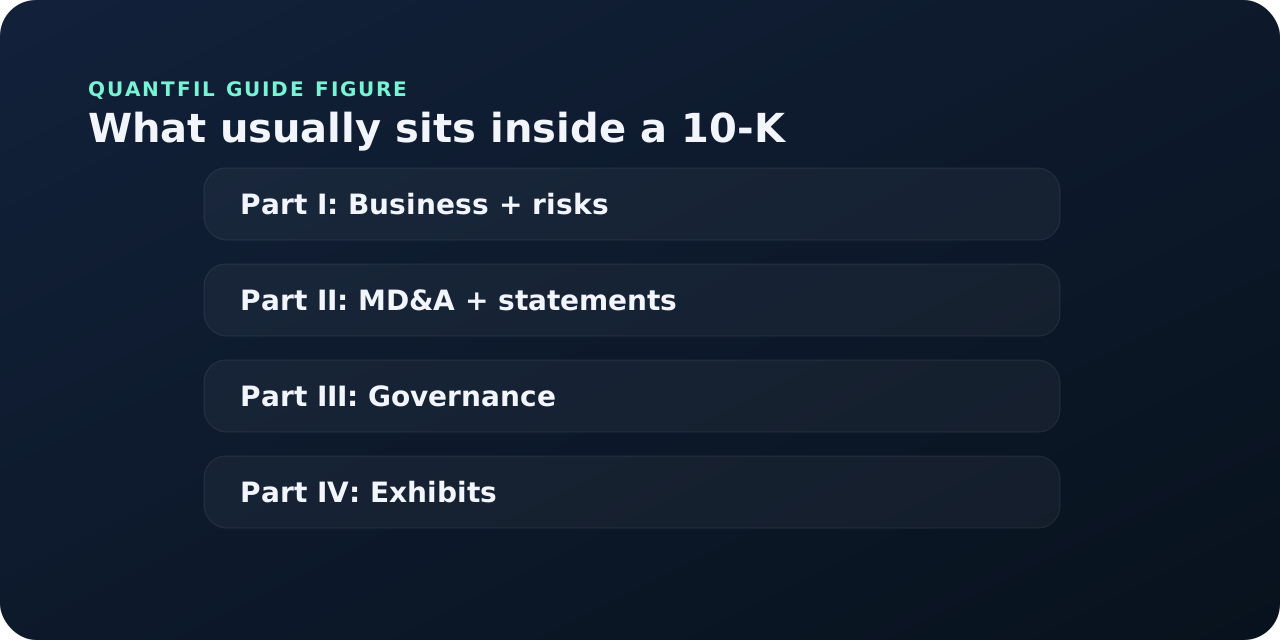
What is usually inside a 10-K
Most first reads should start with the Business section, because it explains what the company sells, where it operates, what subsidiaries matter, and which markets drive the story. After that, Risk Factors tell you what management says could go wrong. Those risks may include competition, regulation, supplier concentration, demand cycles, cybersecurity, litigation, or capital constraints.
The next crucial section is MD&A, short for Management’s Discussion and Analysis. That is where management explains the operating and financial results in its own words. Then come the audited financial statements and notes. Together, those sections help you move from description to evidence. If the business is pitched as high quality, the statements should show the margin profile, cash generation, and capital structure that go with that claim.
- Business: what the company does and how it is organized
- Risk Factors: what could impair the company or its stock
- MD&A: management’s explanation of recent results
- Financial statements and notes: the numbers that confirm or challenge the narrative
How to read a 10-K without getting lost
The easiest mistake is trying to read the document line by line before you know what question you are asking. A better first pass is to read in layers. Start with the business description to understand the company. Read Risk Factors next to see where the pressure points are. Then read MD&A to learn what management thinks drove the year. Only after that should you dig into the statements and footnotes with real context.
For mixed audiences, a simple sequence works well: business, risks, MD&A, income statement, cash flow, balance sheet, and notes. If the company says demand is strong, look for margin support and cash conversion. If it says the balance sheet is flexible, look for debt and liquidity support. The filing becomes much easier when each section is being asked to prove something.
How to use a 10-K on Quantfil
Quantfil is designed to shorten the first pass through a filing, not replace the document. On Quantfil, a filing summary page gives you a quicker answer to the practical question: what changed in the latest report, and why might it matter? That is especially useful if you are screening several large-cap names and need to prioritize where to spend more time.
For example, you can open the Apple or NVIDIA filing summary on Quantfil, read the current framing, check the comparison cards, and then decide whether the filing deserves a slower read in EDGAR. That is the right use of the platform. Use Quantfil to identify the likely signal, then use the SEC filing to verify the conclusion before it matters to your thesis.
Common mistakes to avoid
One common mistake is treating the 10-K like a press release with extra pages. The filing is not useful because it is longer. It is useful because it makes management disclose details that may not fit into a simplified earnings narrative. Another mistake is focusing only on revenue growth while ignoring cash flow, leverage, dilution, or risk language.
A third mistake is forgetting that some of the most important detail sits in the notes and not the headline sections. Lease obligations, stock compensation, acquisition accounting, debt terms, and unusual charges can change how attractive a company looks. Good 10-K use is less about speed-reading and more about keeping the business story, the risks, and the financial proof in the same frame.
Try it on Quantfil
Move from the educational overview into live filing pages that show summaries, comparison cards, and source-linked context.
Frequently asked questions
Is a 10-K the same as the glossy annual report a company mails to shareholders?
No. A 10-K is the SEC filing. It is more standardized, more detailed, and usually more useful for research than the marketing-style annual report sent to shareholders.
How often is a 10-K filed?
Most U.S. public companies file one 10-K each fiscal year after year end. Filing deadlines vary by company size and SEC filer category.
What section should a beginner read first?
Start with Business, then Risk Factors, then MD&A. That order helps the statements make more sense.
Can I rely on a 10-K alone?
It is one of the best starting points, but major conclusions should still be checked against the notes, prior filings, and any relevant current reports.
Primary sources and further reading
Editorial note and disclosure
Quantfil publishes these guides for informational purposes only. They are designed to help readers understand filing structure, investor workflow, and source verification, not to offer investment advice or security recommendations.
If a guide looks stale, unclear, or incomplete, use the source links above and review our editorial standards, corrections policy, and editorial team page for how the site handles updates and accountability.