
Retail is seasonal, inventory-heavy, and sensitive to pricing. That means a single quarter can look stronger or weaker than the underlying business depending on timing, markdowns, promotions, and supply-chain choices.
- Retail revenue needs to be checked against inventory and gross margin.
- Markdowns and promotions can make sales growth lower quality than it first appears.
- Operating cash flow is often the fastest way to see whether the quarter converted cleanly.
Why this matters
This matters because investors often over-trust sales growth. In retail, growth can be bought through discounting, inventory build, or store expansion that does not improve the quality of the business.
What to look for
Look for comparable sales language, gross margin drivers, inventory growth versus sales growth, operating cash flow, lease obligations, store count, and management commentary around promotions or demand.
A practical workflow
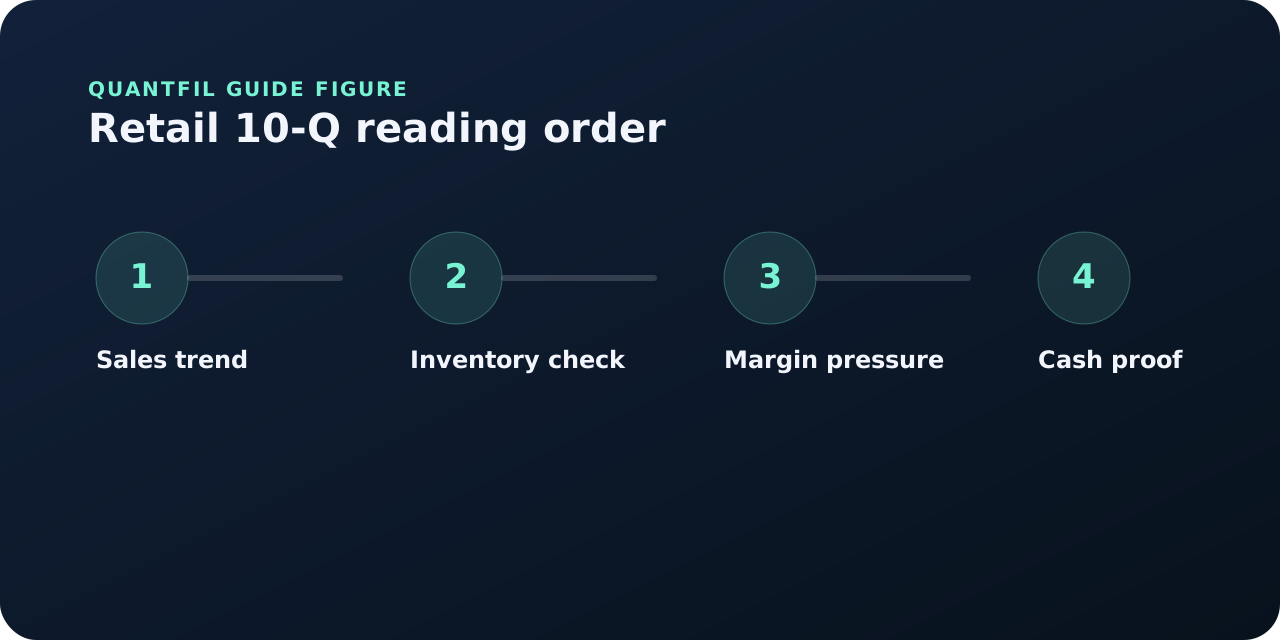
Use the 10-Q as an inventory-and-margin verification exercise. Ask whether sales growth created better economics or whether the company had to sacrifice margin and cash to produce the headline.
- Read sales and comparable-sales commentary, if disclosed.
- Compare inventory growth with revenue growth and management's demand language.
- Check gross margin for markdowns, mix, shrink, freight, or promotion pressure.
- Use operating cash flow and working capital to decide whether the quarter was truly cleaner.
Common mistakes
The common mistake is reading revenue as demand without asking what it cost to generate that revenue. A retailer can grow sales while quietly building the next margin problem.
Worked example / hypothetical, not company data
Comparable sales and total sales answer different questions
A retailer reports total sales growth of 12%, comparable sales growth of 2%, and a larger store base.
Does 12% describe demand growth in established stores?
No. Total growth includes the broader footprint and may include other scope changes. Read the comparable-sales definition for store eligibility, online sales, currency, and fiscal weeks. Then inspect inventory, markdowns, and gross margin. More stores can raise revenue even while productivity or stock quality deserves scrutiny.
Source check: Use the same comparable-sales definition across periods and separate store-count expansion from within-store performance.
Ask yourself
- Did sales improve because demand improved or because pricing got more aggressive?
- Is inventory growing faster than sales?
- Would the quarter still look strong if gross margin and operating cash flow were the first two lines you read?
Choose a company source
These reference pages link to dated filings. Apply the question to the document, rather than treating the reference data as an analyst opinion.
Try the next workflow
Frequently asked questions
What should I check first in a retail 10-Q?
Start with sales, but quickly move to inventory, gross margin, and operating cash flow.
Why is inventory so important?
Inventory can reveal demand weakness, future markdown risk, or a mismatch between management optimism and customer behavior.
Can a retail quarter look good while quality worsens?
Yes. Sales can improve while margin, inventory, and cash conversion deteriorate.
Primary sources and further reading
Use and provenance
Educational analysis, not investment advice. The worked exercise is hypothetical, not a company disclosure. Use the primary sources above for definitions and the exact filing for company-specific facts. Publishing and accountability · Report a correction.