
Non-GAAP metrics can be useful, but only when they help clarify the business instead of hiding the parts management would rather not emphasize. Many investors are told to distrust non-GAAP metrics automatically. A better habit is to ask whether the adjustment helps you understand the economics or simply smooths over the weak spots.
Non-GAAP metrics matter because management often uses them to frame the business the way it wants investors to see it. Sometimes that is helpful. Sometimes it is an attempt to make a rough period look cleaner than it was. The goal is not to read more words than necessary. It is to read the right part of the filing in the right order.
- Non-GAAP metrics should be read after GAAP, not instead of it.
- Recurring exclusions deserve more skepticism than one-time explanatory adjustments.
- A useful adjustment should make the economics clearer, not simply cleaner.
Why this matters
Non-GAAP metrics matter because management often uses them to frame the business the way it wants investors to see it. Sometimes that is helpful. Sometimes it is an attempt to make a rough period look cleaner than it was.
Look at what is being excluded, whether the exclusions recur, and whether the adjustment seems proportional to the story management is telling.
What to look for
Look at what is being excluded, whether the exclusions recur, and whether the adjustment seems proportional to the story management is telling.
Use GAAP first, then read the non-GAAP view as a supplementary explanation. The most important question is whether the adjusted number changes your interpretation or merely softens it.
- Start with the GAAP number.
- Read the reconciliation or explanation of the adjustment.
- Ask whether the exclusion is recurring.
- Decide whether the adjusted view changes or only softens the filing read.
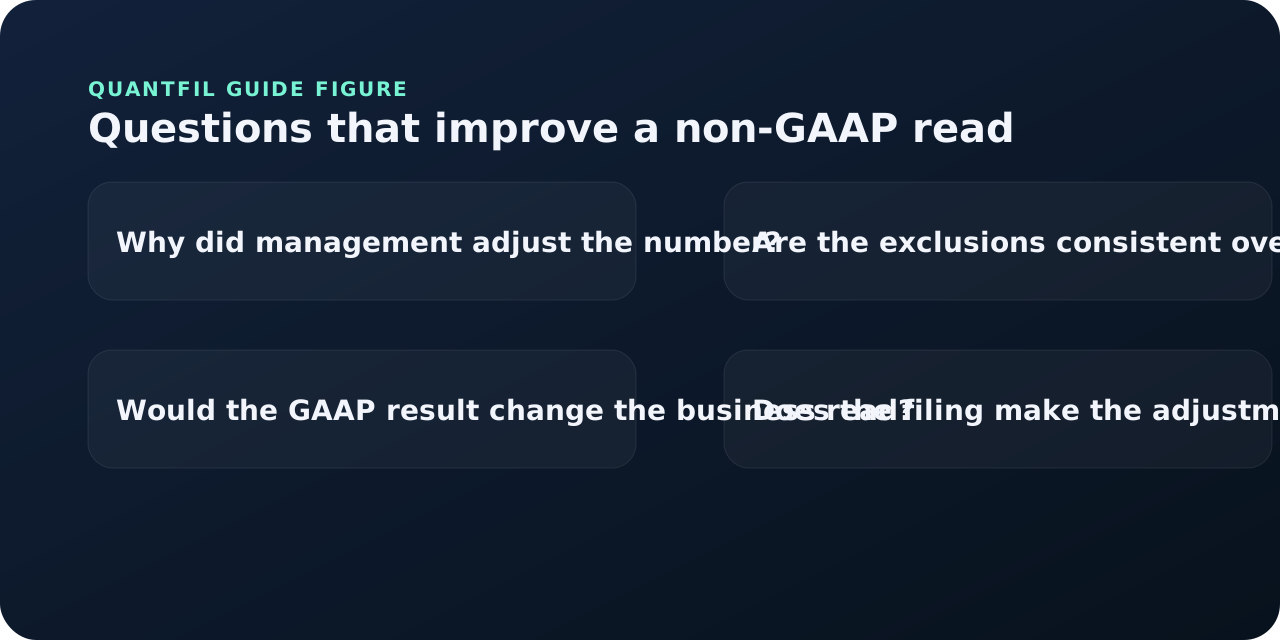
A practical workflow
Use GAAP first, then read the non-GAAP view as a supplementary explanation. The most important question is whether the adjusted number changes your interpretation or merely softens it.
That workflow becomes easier to repeat when you write the next question down before moving on. The filing should not just be read. It should leave you with a sharper question than you had at the start.
Common mistakes
The common mistake is either trusting non-GAAP figures too quickly or rejecting them without reading the logic. The better approach is to understand the adjustment and then decide what it hides or reveals.
A slower, more selective filing habit usually beats a faster but less structured one. In most cases the difference comes from knowing what you are trying to prove before you go hunting through the document.
How to use this on Quantfil
Quantfil helps because the filing summary can surface the main performance story first, making it easier to judge whether the non-GAAP framing is adding clarity or adding spin.
Quantfil is most useful when the educational question comes first and the company page comes second. Learn the document, then use the filing page to apply that reading habit to a real report.
Try it on Quantfil
Move from the educational overview into live filing pages that show summaries, comparison cards, and source-linked context.
Frequently asked questions
Are non-GAAP metrics always misleading?
No, but they should always be checked against the GAAP result.
What makes an adjustment more questionable?
Recurring exclusions or vague explanations usually deserve more skepticism.
Should investors ignore non-GAAP numbers?
Not necessarily. They can be useful if the logic is clear and the exclusions are reasonable.
How does Quantfil help?
It helps establish the base filing read first, so the non-GAAP layer can be judged more calmly.
Primary sources and further reading
Editorial note and disclosure
Quantfil publishes these guides for informational purposes only. They are designed to help readers understand filing structure, investor workflow, and source verification, not to offer investment advice or security recommendations.
If a guide looks stale, unclear, or incomplete, use the source links above and review our editorial standards, corrections policy, and editorial team page for how the site handles updates and accountability.