
Many biotech companies are still pre-profit or pre-commercial. That does not make the filing useless. It changes the job of the filing. The document has to explain what the company is trying to prove, how expensive that proof will be, and how much time the balance sheet buys.
- A biotech 10-K is often about runway and milestones more than near-term earnings.
- R&D spend matters only in context: what is it trying to prove, and how long can the company fund it?
- Dilution, trial timing, and regulatory risk can change the read faster than reported revenue.
Why this matters
This matters because a biotech can look weak through a normal earnings lens while still making progress, or look exciting through a pipeline lens while quietly increasing financing risk.
What to look for
Start with cash and marketable securities, operating cash burn, R&D expense, debt or financing capacity, trial-stage language, licensing terms, and risk-factor changes around regulation, trial delays, or concentration.
A practical workflow
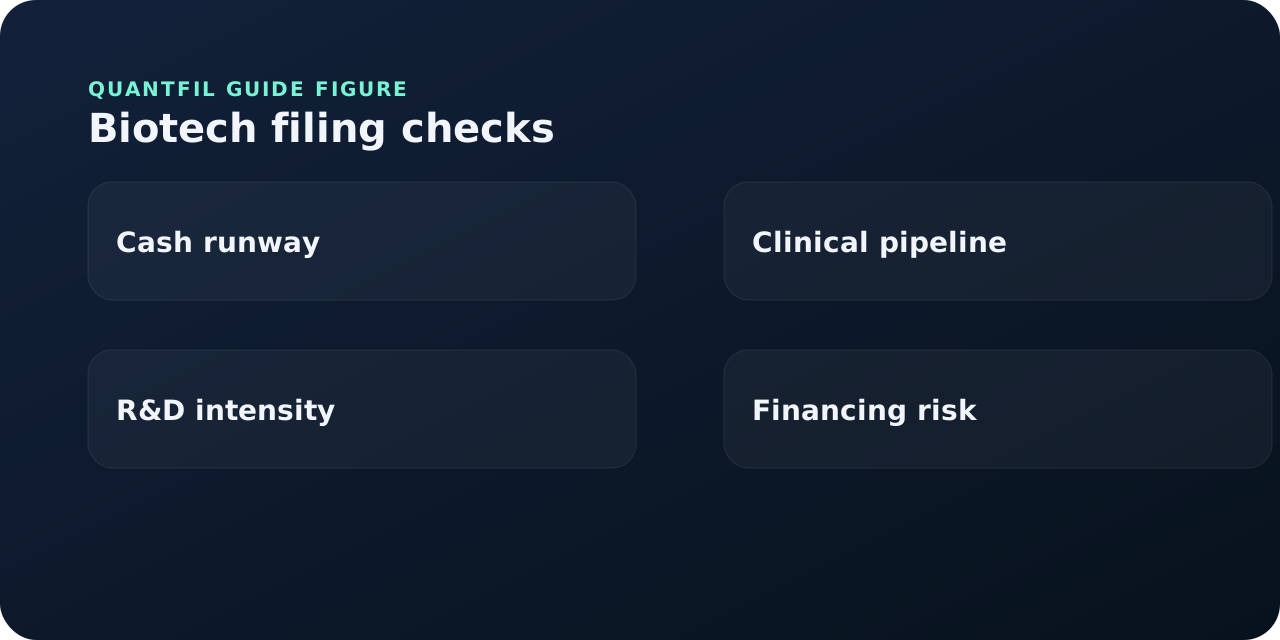
Use the 10-K to answer four questions: what product or platform is being tested, what milestone matters next, how much cash is available, and what could force dilution or delay before that milestone arrives.
- Start with cash, marketable securities, debt, and operating cash burn.
- Map the main programs, trial stages, and next disclosed milestones.
- Read collaboration revenue and licensing terms separately from product revenue.
- Check risk factors for trial delays, regulatory dependence, manufacturing limits, and financing needs.
Common mistakes
The common mistake is treating a biotech loss as automatically bad or a pipeline headline as automatically good. The filing only becomes useful when cash runway and clinical proof are read together.
Worked example / hypothetical, not company data
A runway estimate is not a financing forecast
A pre-revenue developer has 180 million of unrestricted cash and investments and used 60 million in operating cash over the last year.
Does that establish three years of runway?
It gives a simple backward-looking sensitivity: 180 divided by 60 equals three. Trial expansion, milestone payments, manufacturing commitments, debt, and changing burn can shorten it. Read the pipeline stage, liquidity discussion, commitments, and financing terms. Do not translate a regulatory milestone into approval or commercial revenue before it occurs.
Source check: Show the assumed burn rate and excluded cash demands, and compare them with management's stated funding horizon.
Ask yourself
- How many quarters of runway does the filing appear to support?
- What milestone would most change the next filing read?
- Is R&D spending buying progress, optionality, or just more time?
Choose a company source
These reference pages link to dated filings. Apply the question to the document, rather than treating the reference data as an analyst opinion.
Try the next workflow
Frequently asked questions
Should I focus on revenue first in a biotech 10-K?
Usually not if the company is still development-stage. Cash runway, trial progress, and financing risk often explain more than revenue.
Where does dilution risk show up?
It can appear in cash flow, liquidity discussion, share-count disclosures, debt terms, shelf registrations, and risk factors.
Why does R&D need context?
Because R&D can signal productive investment or a costly delay depending on the pipeline stage and balance-sheet position.
Primary sources and further reading
Use and provenance
Educational analysis, not investment advice. The worked exercise is hypothetical, not a company disclosure. Use the primary sources above for definitions and the exact filing for company-specific facts. Publishing and accountability · Report a correction.