
A balance sheet does not usually make the headline, but it often tells you whether the business has become safer, more fragile, or more constrained. It is easy to ignore the balance sheet when the income statement looks strong. That is exactly when it can be most useful, because a strong quarter can still leave the company in a weaker position.
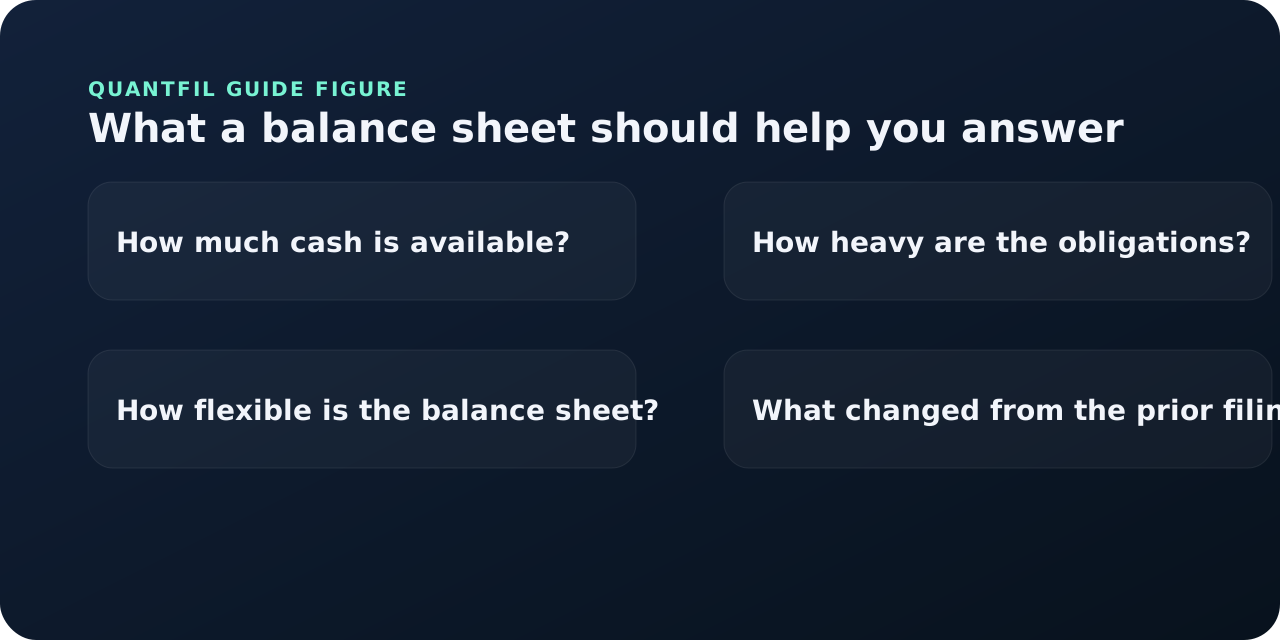
The balance sheet matters because it shows cash, assets, liabilities, and equity in one place. Those relationships help you judge liquidity, leverage, and how much room management has to absorb stress or keep investing. The goal is not to read more words than necessary. It is to read the right part of the filing in the right order.
- The balance sheet changes the risk read of the filing.
- Cash and liabilities matter most when the next period may be weaker.
- Comparing the current balance sheet with the prior filing is often more useful than reading it in isolation.
Why this matters
The balance sheet matters because it shows cash, assets, liabilities, and equity in one place. Those relationships help you judge liquidity, leverage, and how much room management has to absorb stress or keep investing.
Start with cash and current assets, then check total liabilities, debt, and equity. The important question is whether the company's position became stronger or weaker relative to the prior filing.
What to look for
Start with cash and current assets, then check total liabilities, debt, and equity. The important question is whether the company's position became stronger or weaker relative to the prior filing.
Use the balance sheet to pressure-test the comfort of the story. A company that sounds resilient should usually look reasonably liquid and financially flexible too.
- Check cash and current assets.
- Review liabilities and debt-related pressure.
- Compare equity and overall balance-sheet change with the prior filing.
- Ask whether the company now looks more or less flexible.
A practical workflow
Use the balance sheet to pressure-test the comfort of the story. A company that sounds resilient should usually look reasonably liquid and financially flexible too.
That workflow becomes easier to repeat when you write the next question down before moving on. The filing should not just be read. It should leave you with a sharper question than you had at the start.
Common mistakes
The common mistake is treating the balance sheet as static background. In practice, small shifts in cash, liabilities, or equity can change the risk read much faster than investors expect.
A slower, more selective filing habit usually beats a faster but less structured one. In most cases the difference comes from knowing what you are trying to prove before you go hunting through the document.
How to use this on Quantfil
Quantfil helps by keeping the balance-sheet section near the summary and comparison blocks, so the position check is easier to make as part of the same workflow.
Quantfil is most useful when the educational question comes first and the company page comes second. Learn the document, then use the filing page to apply that reading habit to a real report.
Try it on Quantfil
Move from the educational overview into live filing pages that show summaries, comparison cards, and source-linked context.
Frequently asked questions
Why should investors care about the balance sheet?
Because it tells you how much room the company has to withstand stress or keep investing.
What is one simple thing to check first?
Cash and liquidity are often the most useful first check.
Can the balance sheet matter in a strong quarter?
Yes. A strong quarter can still leave the business with more obligations or less flexibility.
How does Quantfil help?
It puts the balance-sheet view in the same read as the summary and comparisons, which makes the position check harder to skip.
Primary sources and further reading
Editorial note and disclosure
Quantfil publishes these guides for informational purposes only. They are designed to help readers understand filing structure, investor workflow, and source verification, not to offer investment advice or security recommendations.
If a guide looks stale, unclear, or incomplete, use the source links above and review our editorial standards, corrections policy, and editorial team page for how the site handles updates and accountability.