
A useful red-flag process is less about hunting dramatic language and more about spotting places where the filing stops agreeing with itself. The hardest part of red-flag reading is staying calm. Many filings contain language that sounds worrying in isolation. The better approach is to ask whether the warning shows up in more than one part of the filing.
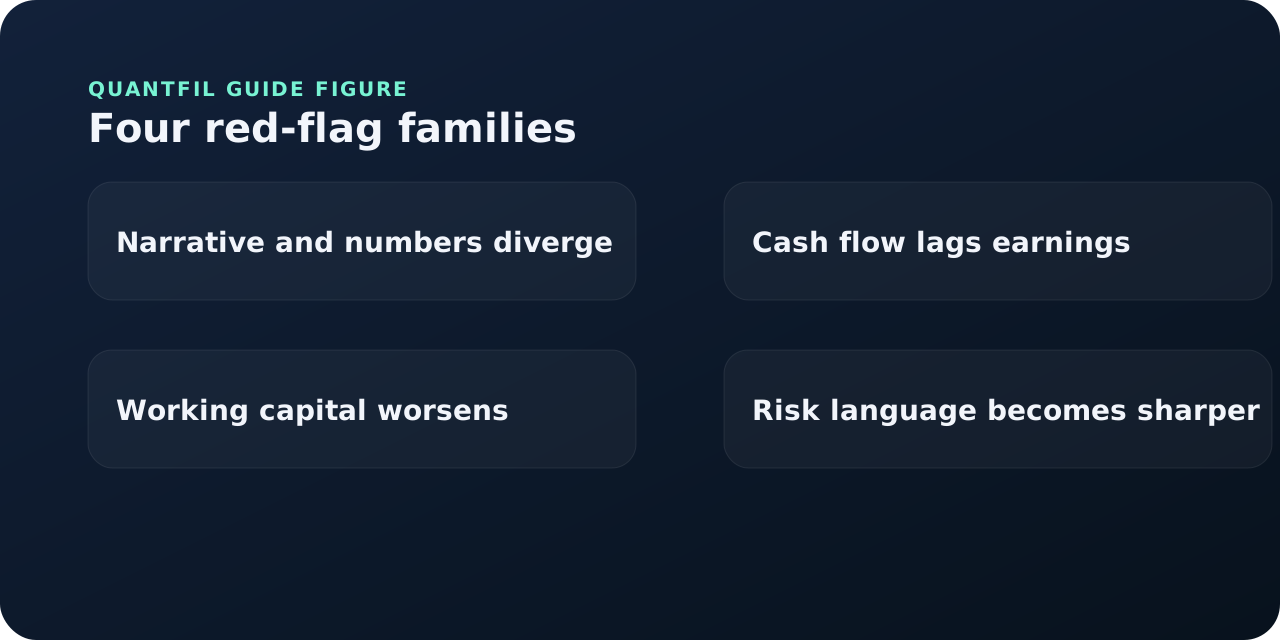
A filing deserves extra attention when the story and the evidence stop lining up. That can show up through weak cash conversion, deteriorating working capital, more defensive guidance, or newly stressed risk language. The goal is not to read more words than necessary. It is to read the right part of the filing in the right order.
- Red flags often show up as inconsistencies across the filing.
- Cash flow, working capital, and disclosure tone matter as much as the headline quarter.
- A warning sign is more credible when it appears in more than one section.
Why this matters
A filing deserves extra attention when the story and the evidence stop lining up. That can show up through weak cash conversion, deteriorating working capital, more defensive guidance, or newly stressed risk language.
Look for mismatches. Revenue up but cash flow down. Management more optimistic while gross margin weakens. A strong quarter with heavier receivables or inventory. Those are the kinds of tension points that deserve slower reading.
What to look for
Look for mismatches. Revenue up but cash flow down. Management more optimistic while gross margin weakens. A strong quarter with heavier receivables or inventory. Those are the kinds of tension points that deserve slower reading.
Use the filing as a cross-checking exercise. If one part looks strong, ask what the other sections say. The more the sections disagree, the more careful the interpretation should become.
- Read the summary and identify the main claim.
- Check whether cash flow and balance-sheet movement support it.
- Compare with the prior filing for disclosure changes.
- Write down the one risk that now needs the most verification.
A practical workflow
Use the filing as a cross-checking exercise. If one part looks strong, ask what the other sections say. The more the sections disagree, the more careful the interpretation should become.
That workflow becomes easier to repeat when you write the next question down before moving on. The filing should not just be read. It should leave you with a sharper question than you had at the start.
Common mistakes
The common mistake is reacting to a single phrase instead of building a case from several connected signals. Another is dismissing a filing as fine because one headline metric looked strong.
A slower, more selective filing habit usually beats a faster but less structured one. In most cases the difference comes from knowing what you are trying to prove before you go hunting through the document.
How to use this on Quantfil
Quantfil helps because the summary, comparison cards, and statement sections pull the main pressure points close together. That makes it easier to notice when the filing is sending mixed signals.
Quantfil is most useful when the educational question comes first and the company page comes second. Learn the document, then use the filing page to apply that reading habit to a real report.
Try it on Quantfil
Move from the educational overview into live filing pages that show summaries, comparison cards, and source-linked context.
Frequently asked questions
Does a red flag always mean the thesis is broken?
No. It means the filing deserves slower and more skeptical work.
What is one of the most common red flags?
A strong earnings print that is not supported by cash flow is one of the most common.
Should I worry about every risk-factor update?
Not every change matters equally. Focus on the ones that connect to the rest of the filing.
How does Quantfil help with red flags?
It helps readers see the important sections together so inconsistencies become easier to spot.
Primary sources and further reading
Editorial note and disclosure
Quantfil publishes these guides for informational purposes only. They are designed to help readers understand filing structure, investor workflow, and source verification, not to offer investment advice or security recommendations.
If a guide looks stale, unclear, or incomplete, use the source links above and review our editorial standards, corrections policy, and editorial team page for how the site handles updates and accountability.