
Many investors read a filing as if the only question is what the company reported. The more useful question is what changed since the last report. That shift in mindset matters because a business is rarely understood well from one filing alone. Real signal usually emerges when the latest filing is set beside the prior one and the differences are made explicit.
That is why comparison is such a core Quantfil workflow. A filing summary becomes much more useful when it helps you see how management framing, margins, cash generation, balance-sheet posture, and risk language moved relative to the prior report. Comparison turns raw disclosure into a business-read question.
- Do not compare only one number. Compare narrative, statements, and disclosures together.
- The most useful deltas are the ones that change the business read, not just the headline print.
- Quantfil is especially helpful here because the product is already structured around current-versus-prior reporting.
Start by making sure you are comparing the right things
Before looking for signal, make sure the comparison is fair. Check the filing date, reporting period, filing type, and business context. A sequential quarter and a year-over-year quarter answer different questions. A 10-K and a 10-Q also do different jobs. If the frame is wrong, the insight will be weak before you start.
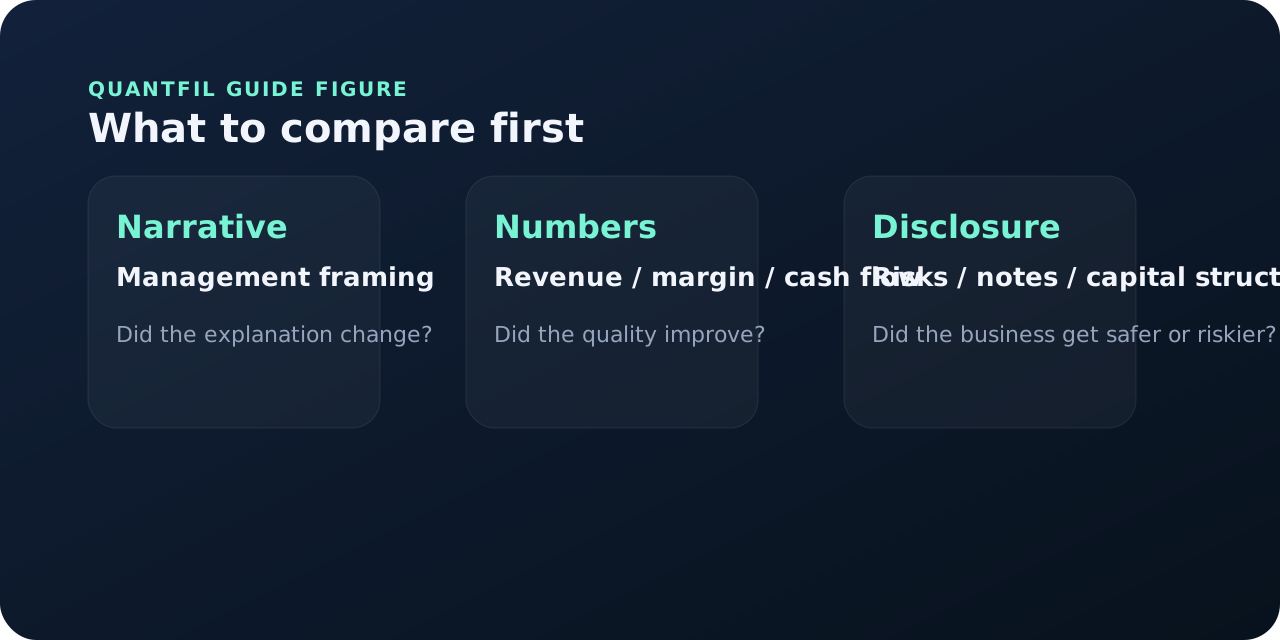
Once the frame is set, compare in layers. Start with management framing, then move to the core statements, then check risk and note disclosure. That order works because it lets you see what management says changed before you test whether the statements and disclosures support it.
Compare the narrative, not just the numbers
A lot of filing signal lives in wording. Did management stop talking about a former growth driver? Did it add more caution around demand, competition, or regulation? Did it shift emphasis from expansion to cost discipline? These changes often matter because they reveal which issues are becoming more important inside the business.
A strong comparison process marks changes in emphasis, tone, specificity, and recurring themes. The goal is not to over-read every adjective. The goal is to identify whether management is telling the same business story as last time or a materially different one.
Compare the statements for quality, not just movement
Revenue growth alone rarely settles the question. Compare revenue, gross profit, operating income, EPS, operating cash flow, and the balance-sheet items that support the quarter. Ask whether those lines moved together. If revenue rose but cash generation softened or working capital worsened, the quarter may be less clean than the headline suggests.
This is also where percentage changes can mislead. A smaller improvement in margins and cash quality may matter more than a larger top-line move. Comparison is useful because it helps investors judge the quality of the change, not just its size.
- Revenue and gross profit
- Operating income and EPS
- Operating cash flow and capital spending
- Cash, debt, inventory, receivables, and equity where relevant
Compare disclosures and risk language
Disclosures often carry more signal than many investors expect. A risk section that expands around supply chain, demand, AI execution, or legal exposure may matter even if the quarter looked fine numerically. The same is true for note disclosures, debt terms, and accounting explanations. These can show where management’s operating confidence is less secure than the headline suggests.
The best comparison work asks whether the company became more transparent, more cautious, or more exposed. Those are the kinds of changes that can reshape the business read even when the quarter’s top-line numbers look stable.
How to compare filings on Quantfil
Quantfil is built around this job. The filing summary establishes the current read, the comparison cards show how core metrics changed, and the statement sections help you see whether the improvement or deterioration held together across the business. From there, the SEC source gives you the detailed wording and notes when the conclusion needs confirmation.
A useful way to use the platform is to open Apple, NVIDIA, or Tesla on Quantfil, read the current-versus-prior framing, and ask whether the delta changes your understanding of quality, durability, or risk. That is where comparison becomes more than just data review.
Try it on Quantfil
Move from the educational overview into live filing pages that show summaries, comparison cards, and source-linked context.
Frequently asked questions
Should I compare a filing year over year or sequentially?
It depends on the question. Year over year is better for baseline direction; sequential comparison is better for recent momentum and shorter-term shifts.
What if management tone changes but the numbers do not?
That often matters. Changed tone can signal future pressure or a shift in what management is focused on.
Is one comparison enough?
Usually not. The strongest read often uses multiple frames such as prior quarter and prior year.
Why is comparison a core Quantfil feature?
Because filing signal usually becomes much easier to see when the current report is anchored to the prior one.
Primary sources and further reading
Editorial note and disclosure
Quantfil publishes these guides for informational purposes only. They are designed to help readers understand filing structure, investor workflow, and source verification, not to offer investment advice or security recommendations.
If a guide looks stale, unclear, or incomplete, use the source links above and review our editorial standards, corrections policy, and editorial team page for how the site handles updates and accountability.