
You can understand a company surprisingly well using only its SEC filings if you read them in the right order. The trick is not to read everything. It is to build a sequence that moves from business model to risk, from management framing to statements, and from statements to the few questions that really matter next. Investors often think they need a dozen data feeds before they can understand a business. In practice, the source documents already contain most of the evidence that matters if you know how to structure the read.
This workflow matters because it keeps the research process anchored to what the company actually disclosed. That reduces the chance of confusing market mood with business reality. The goal is not to read more words than necessary. It is to read the right part of the filing in the right order.
- A company can often be understood well enough from filings alone to frame the right next question.
- The order matters: business and risk first, statements second, footnotes third.
- A good filing read leaves you with a narrower watchlist, not with a pile of disconnected notes.
Why this matters
This workflow matters because it keeps the research process anchored to what the company actually disclosed. That reduces the chance of confusing market mood with business reality.
Look for the business model, the main risk exposures, the way management explains the period, and whether earnings, cash flow, and balance sheet movement actually support that explanation.
What to look for
Look for the business model, the main risk exposures, the way management explains the period, and whether earnings, cash flow, and balance sheet movement actually support that explanation.
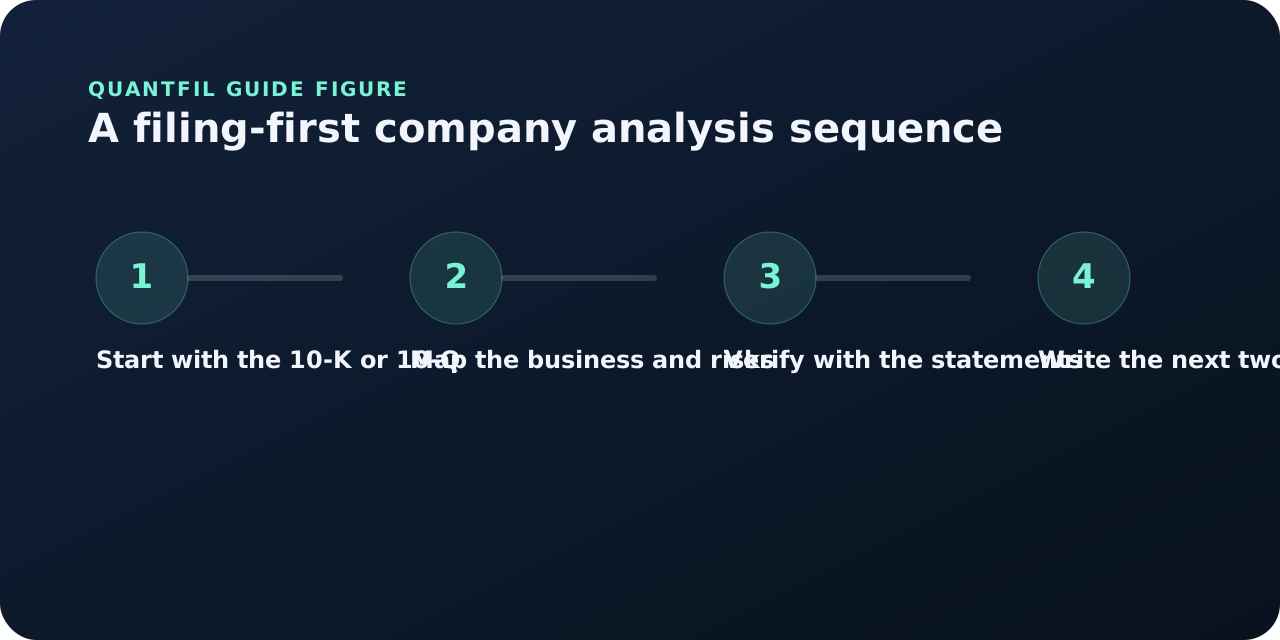
Use the filing to answer four questions in order: what the company is, what could hurt it, what changed, and what still needs proof next quarter.
- Read the latest 10-K or 10-Q with one business question in mind.
- Mark the disclosures that explain what drives revenue, margins, and capital needs.
- Use the statements and notes to test whether the narrative is durable or fragile.
- Write down what the next filing would need to prove before your view gets stronger.
A practical workflow
Use the filing to answer four questions in order: what the company is, what could hurt it, what changed, and what still needs proof next quarter.
That workflow becomes easier to repeat when you write the next question down before moving on. The filing should not just be read. It should leave you with a sharper question than you had at the start.
Common mistakes
The common mistake is collecting facts without building a hierarchy. A filing-first process works only when the reader decides which two or three questions matter most before getting lost in detail.
A slower, more selective filing habit usually beats a faster but less structured one. In most cases the difference comes from knowing what you are trying to prove before you go hunting through the document.
How to use this on Quantfil
Quantfil fits this workflow by shortening the first pass. Start with the filing summary, mark the business read, then use the SEC source to verify the claims that would actually change your view.
Quantfil is most useful when the educational question comes first and the company page comes second. Learn the document, then use the filing page to apply that reading habit to a real report.
Ask yourself
Try it on Quantfil
Move from the educational overview into live filing pages that show summaries, comparison cards, and source-linked context.
Try the next workflow
Use one of these next-step pages if you want to turn the concept into a repeatable habit on a live filing, earnings setup, or company comparison task.
Frequently asked questions
Can a retail investor really analyze a company mostly through filings?
Yes. Filings will not answer every question, but they are strong enough to build a durable first view and a disciplined watchlist.
Should I start with the annual filing or the latest quarter?
If you are new to the company, the annual filing is usually the cleaner starting point. If you already know the business, the latest quarter can be the better change document.
What if the filing is too long?
That usually means the reading order is wrong. The answer is almost never to read more pages in sequence. It is to decide what the filing needs to prove.
How does Quantfil help?
It helps you start with a structured first read so the source filing can be used to verify the parts that matter most.
Primary sources and further reading
Editorial note and disclosure
Quantfil publishes these guides for informational purposes only. They are designed to help readers understand filing structure, investor workflow, and source verification, not to offer investment advice or security recommendations.
If a guide looks stale, unclear, or incomplete, use the source links above and review our editorial standards, corrections policy, and editorial team page for how the site handles updates and accountability.