
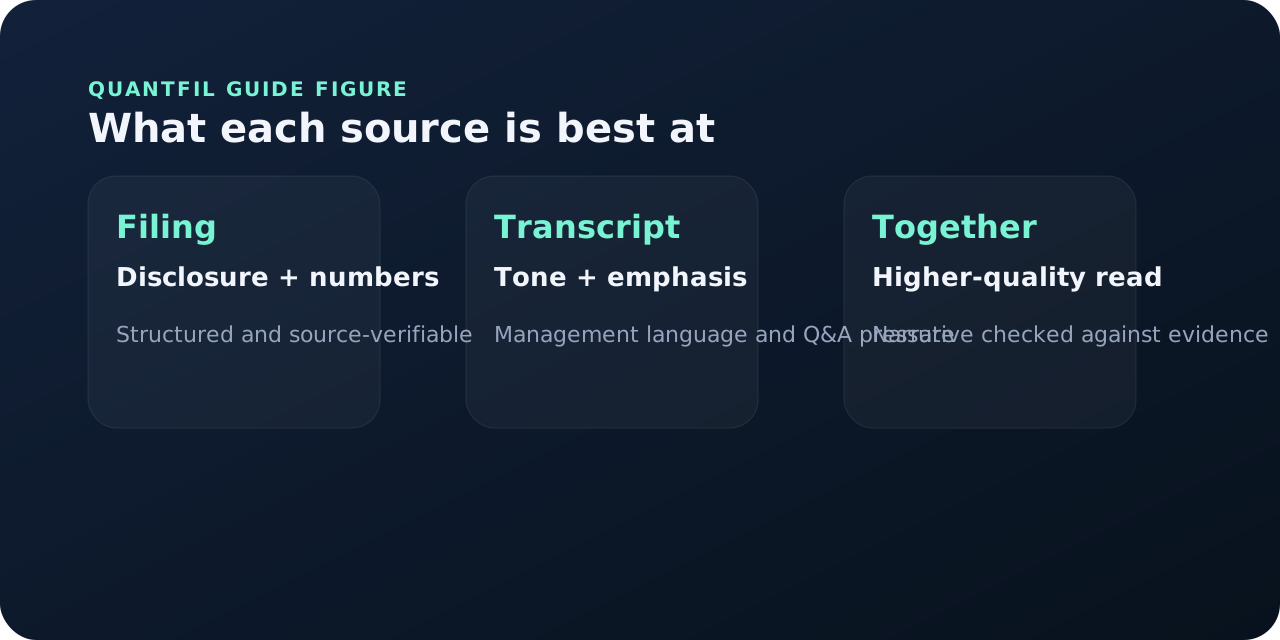
Earnings transcripts are often useful, but they become much more useful when they are read after the filing-backed picture is already clear. The filing tells you what was reported, what the official disclosures say, and how the statements moved. The transcript tells you what management chose to emphasize, what analysts pushed on, and where the company sounded most confident or most conditional.
That means the best workflow is sequential. Start with the filing or filing summary to establish the facts. Then use the transcript to understand management’s framing. Finally, compare the two. If management sounds calm but the filing looks stressed, that gap matters. If the filing and the call reinforce each other, confidence improves.
- Filing first, transcript second is usually the cleanest workflow.
- Transcripts are strongest when they help you interpret emphasis, confidence, and analyst pushback.
- The best read comes from comparing management language with filing-backed facts.
What filings do best
Filings are strongest when you need the business facts, the reporting period, the statement movement, the risk disclosures, and the official source language. They are the foundation for the operating read because they are structured and easier to verify. If you want to know whether margins, cash flow, leverage, or balance-sheet movement support the story, the filing is the place to start.
That is why a transcript-first workflow often creates confusion. Without the filing, management’s commentary can sound more definitive than the evidence. The filing gives you the base layer that keeps the rest of the read honest.
What transcripts add
Transcripts add two important things: emphasis and pushback. Management does not spend equal time on every part of the business. What it repeats, qualifies, or deflects often matters. Analysts add a second layer by asking about the parts of the quarter or year that remain unresolved. Together, those elements help you understand where confidence is strong and where it is being tested.
That makes transcripts especially useful when the filing read is mixed. If the quarter looks decent but not clean, the call can help you understand whether management is leaning into the same issues the statements are raising or trying to shift attention away from them.
How to compare the filing and the transcript
Start by identifying the main filing read. Then ask whether management commentary supports, refines, or conflicts with it. If the filing suggests the quarter was more about margin resilience than revenue strength, did management say the same thing? If the filing suggests cash generation is the key support, did analysts challenge that? These are the comparisons that make transcript work useful.
Also compare confidence level. Does the call sound more qualified than the filing read? Are analysts repeatedly pushing on a topic that management answers indirectly? If so, the transcript may be revealing where the market debate is likely to persist even if the filing looked superficially clean.
- Write down the filing read before opening the transcript
- Track repeated themes in prepared remarks
- Note which questions analysts repeat in Q&A
- Check whether management’s language matches the statement evidence
How this works on Quantfil
Quantfil is built to handle the filing-first half of the workflow. Use the summary, comparison cards, and statement sections to establish the main business read. Once that is clear, transcript work becomes much more productive because you are no longer listening for a generic story. You are listening for confirmation, conflict, or nuance around the filing-backed conclusion.
For a practical example, use a company page like Apple or Tesla on Quantfil to establish the quarter’s main signal, then move into transcript review with a short list of questions: what did management emphasize, what did analysts push on, and did the tone strengthen or weaken confidence in the filing read?
Common mistakes to avoid
One mistake is treating the transcript like a substitute for the filing. Another is reading only prepared remarks and skipping Q&A, where the most revealing pressure points often show up. A third is collecting quotes without tying them back to the actual financial and disclosure evidence. That turns transcript research into impression management rather than analysis.
The more disciplined workflow is simple: facts first, commentary second, comparison third. That order produces a calmer and more reliable read than jumping straight to management language.
Try it on Quantfil
Move from the educational overview into live filing pages that show summaries, comparison cards, and source-linked context.
Frequently asked questions
Should I read the transcript before the filing?
Usually no. The filing-first workflow is more reliable because it anchors the read in actual disclosures and statements.
What part of the transcript matters most?
It depends, but Q&A is often especially useful because analysts push on unresolved issues.
Can the transcript contradict the filing?
Not in formal disclosure terms, but it can create a different impression through emphasis, confidence, or qualification.
How does Quantfil help here?
Quantfil helps you establish the filing-backed read first so transcript review becomes a comparison exercise instead of an impression exercise.
Primary sources and further reading
Editorial note and disclosure
Quantfil publishes these guides for informational purposes only. They are designed to help readers understand filing structure, investor workflow, and source verification, not to offer investment advice or security recommendations.
If a guide looks stale, unclear, or incomplete, use the source links above and review our editorial standards, corrections policy, and editorial team page for how the site handles updates and accountability.