
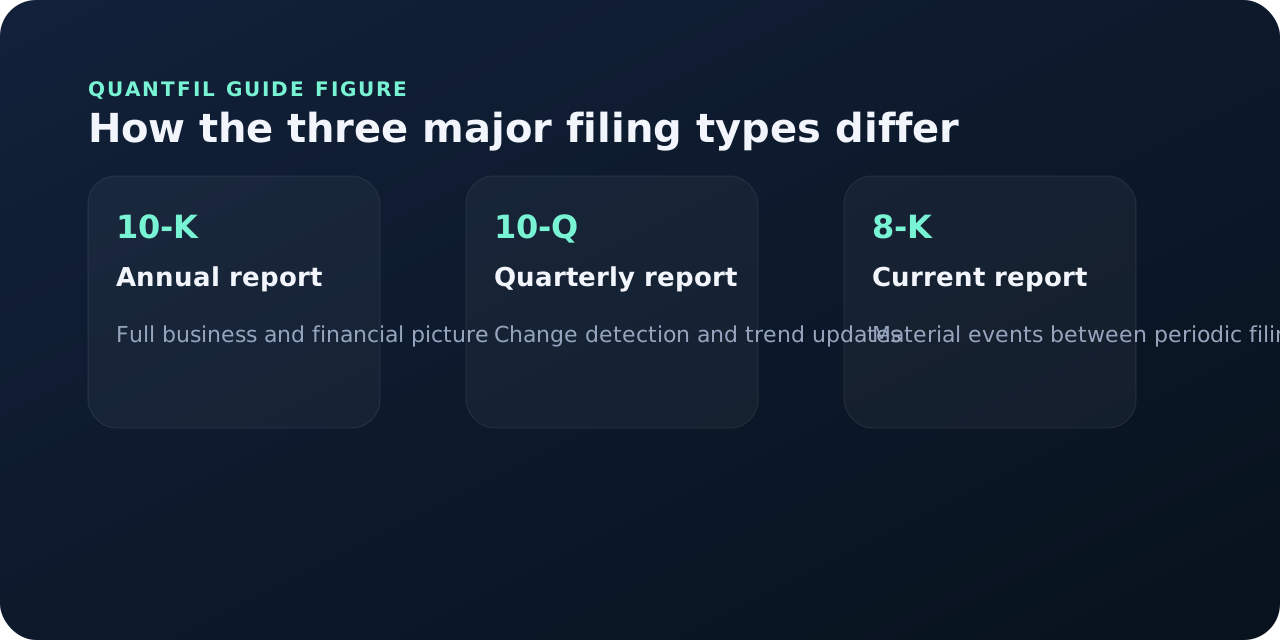
Many investors hear about 10-Ks, 10-Qs, and 8-Ks as if they are just different filing codes. In practice, they are different research tools. A 10-K gives the annual operating and financial map. A 10-Q updates that picture during the year. An 8-K reports important events that cannot wait for the next periodic filing.
Once you understand that distinction, filing research gets much easier. You stop asking one document to do the job of another. If you want the big annual picture, use the 10-K. If you want to know whether the quarter changed the trend, use the 10-Q. If you need to know about an acquisition, leadership change, financing, major agreement, or another important event, check the 8-K.
- 10-K = annual business and financial map.
- 10-Q = quarterly change detection and operating update.
- 8-K = current report for material events between periodic filings.
How these filings differ in practice
The main difference is scope. A 10-K is comprehensive. It gives you business description, risk factors, MD&A, audited financial statements, and notes for the full fiscal year. A 10-Q is narrower and more current. It updates management discussion, financial statements, and any material changes in risk or controls during the year. An 8-K is narrower still, but it can be more urgent. It exists so that important events are not left waiting until the next quarter or annual report.
The second difference is the question each filing answers. The 10-K answers, what is this business and how did the full year look? The 10-Q answers, what changed this quarter and does it alter the operating read? The 8-K answers, what just happened that investors should know now?
When the 10-K matters most
Use the 10-K when you need to understand business quality, long-term risk, capital allocation, and the full-year statement picture. It is the document that tells you whether a company’s margins, cash flow, debt load, and disclosures support the longer-term investment case. If you are new to a company, the 10-K is usually the best place to start.
It is also the best document for comparing the company with itself year over year. Risk language, business description, segment emphasis, and balance-sheet posture all tend to be easier to judge in the annual filing than in shorter event-driven updates.
When the 10-Q matters most
Use the 10-Q when you need to know whether the business is gaining or losing momentum. The quarterly filing is where acceleration, slowdown, margin pressure, inventory build, and working-capital changes become visible. That makes it one of the best tools for change detection.
The 10-Q is especially important when a market headline or earnings release sounds strong but you want to know whether the statements actually support that reading. It is not the best single source for learning the entire company from scratch, but it is often the best source for learning whether the trend improved.
When the 8-K matters most
Use the 8-K when a material event happens between periodic reports. That could include a major agreement, an acquisition, a financing, a CEO departure, a bankruptcy-related development, or another event that changes the information set investors are working with. The 8-K is not meant to be a full business read. It is meant to disclose something important now.
That is why 8-Ks should usually be read with a follow-up question in mind. Does this event change the business case, the capital structure, the governance read, or the next quarter’s outlook? The current report is often the start of the investigation, not the end.
How to use all three together on Quantfil
Quantfil is strongest when periodic filings are read in sequence. Start with the filing summary page to understand the current 10-K or 10-Q read. Use comparison cards to see what changed from the prior report. Then, if there was an important corporate event between reports, use the SEC source to check for relevant 8-K disclosures that might explain why the filing looks different.
That workflow is powerful because it matches the way real company understanding develops. Annual filings build the baseline, quarterlies update the trend, and event-driven reports explain surprises or structural changes. Investors get into trouble when they let one of those filing types dominate the whole read.
Try it on Quantfil
Move from the educational overview into live filing pages that show summaries, comparison cards, and source-linked context.
Frequently asked questions
Which filing should a beginner read first?
Usually the 10-K, because it provides the clearest full-picture introduction to the company.
Is an 8-K always more important than a 10-Q?
Not necessarily. An 8-K can be urgent, but it is often narrower. Importance depends on the event being reported.
Can a company file multiple 8-Ks in a year?
Yes. Companies can file many 8-Ks if multiple material events occur.
Should investors compare all three types together?
Yes. They serve different purposes and often make the most sense when read as part of one ongoing research process.
Primary sources and further reading
Editorial note and disclosure
Quantfil publishes these guides for informational purposes only. They are designed to help readers understand filing structure, investor workflow, and source verification, not to offer investment advice or security recommendations.
If a guide looks stale, unclear, or incomplete, use the source links above and review our editorial standards, corrections policy, and editorial team page for how the site handles updates and accountability.