
A good earnings call can create false closure. Management answers questions, the stock moves, and the story feels settled. The calmer workflow is to treat the call as a source of pressure points, not as the last word. Calls are full of emphasis, tone, and language under pressure. That makes them useful, but also easy to over-trust if they are not tied back to the filing.
This matters because the most revealing part of a call is often not what management says once. It is what management keeps repeating, reframing, or answering indirectly under analyst pressure. The goal is not to read more words than necessary. It is to read the right part of the filing in the right order.
- The call is most useful for emphasis and pressure, not for replacing the filing.
- Repeated analyst questions usually point to the market's unresolved issue.
- The right post-call output is a short verification list.
Why this matters
This matters because the most revealing part of a call is often not what management says once. It is what management keeps repeating, reframing, or answering indirectly under analyst pressure.
Look for repeated themes, the questions analysts asked more than once, any defensive shifts in tone, and whether those themes can be tied to a filing-backed metric or note.
What to look for
Look for repeated themes, the questions analysts asked more than once, any defensive shifts in tone, and whether those themes can be tied to a filing-backed metric or note.
Treat the call as a map of unresolved investor questions, then use the filing and the next quarter to decide which questions were truly answered.
- Mark the two themes management repeated most often.
- List the questions analysts seemed unwilling to drop.
- Tie each theme back to a filing metric, footnote, or risk disclosure.
- Write down what next quarter would need to prove before the issue is truly resolved.
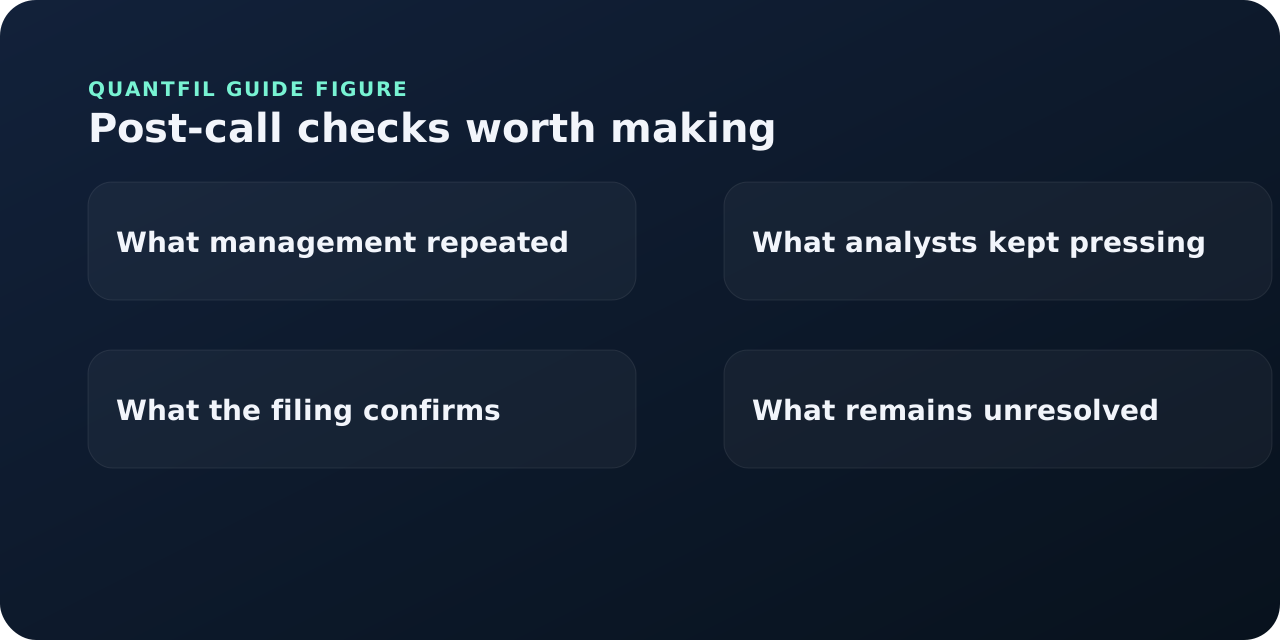
A practical workflow
Treat the call as a map of unresolved investor questions, then use the filing and the next quarter to decide which questions were truly answered.
That workflow becomes easier to repeat when you write the next question down before moving on. The filing should not just be read. It should leave you with a sharper question than you had at the start.
Common mistakes
The common mistake is collecting quotes instead of building a verification list. A quote matters only when it changes what you look for in the filing or the next report.
A slower, more selective filing habit usually beats a faster but less structured one. In most cases the difference comes from knowing what you are trying to prove before you go hunting through the document.
How to use this on Quantfil
Quantfil makes this easier because the filing summary already frames what changed. That lets the transcript review focus on management emphasis and pressure, not on reconstructing the whole quarter from scratch.
Quantfil is most useful when the educational question comes first and the company page comes second. Learn the document, then use the filing page to apply that reading habit to a real report.
Ask yourself
Try it on Quantfil
Move from the educational overview into live filing pages that show summaries, comparison cards, and source-linked context.
Try the next workflow
Use one of these next-step pages if you want to turn the concept into a repeatable habit on a live filing, earnings setup, or company comparison task.
Frequently asked questions
Is the earnings call more important than the filing?
Usually no. The filing is still stronger for verification, while the call is stronger for emphasis and pressure.
What if the call sounds great but the filing looks mixed?
The filing should usually win the argument unless there is a specific reason the mixed read is temporary.
Do repeated analyst questions really matter?
Yes. They often identify the exact place where investor confidence is still not settled.
How does Quantfil help?
It helps you arrive at the call with a filing-backed view already in place.
Primary sources and further reading
Editorial note and disclosure
Quantfil publishes these guides for informational purposes only. They are designed to help readers understand filing structure, investor workflow, and source verification, not to offer investment advice or security recommendations.
If a guide looks stale, unclear, or incomplete, use the source links above and review our editorial standards, corrections policy, and editorial team page for how the site handles updates and accountability.