
Meta's annual filing is a strong case study because it contains a clean core engine, a large adjacent bet, and enough spending intensity to make the quality of the narrative worth testing. It is the kind of filing that rewards readers who can separate the strong core from the expensive optionality around it. Case studies are useful when they turn a real filing into a repeatable reading habit. Meta is a good example because it combines obvious strength with a less obvious cost structure underneath.
This filing matters because it helps investors practice a common large-cap question: when does a very strong core business successfully carry a heavy investment cycle and when does that investment cycle start to change the quality of the earnings story? The goal is not to read more words than necessary. It is to read the right part of the filing in the right order.
- Meta's core ad engine is still the base case of the filing.
- The annual question is how much infrastructure spend the core can fund without weakening quality.
- Reality Labs matters less as a headline and more as a test of how much drag the core business can comfortably absorb.
Why this matters
This filing matters because it helps investors practice a common large-cap question: when does a very strong core business successfully carry a heavy investment cycle and when does that investment cycle start to change the quality of the earnings story?
Look for ad revenue durability, margin resilience, Reality Labs drag, the pace of infrastructure spending, and whether free cash flow still makes the broader story feel comfortable.
What to look for
Look for ad revenue durability, margin resilience, Reality Labs drag, the pace of infrastructure spending, and whether free cash flow still makes the broader story feel comfortable.
Read Meta's 10-K as a balance problem. The question is whether the core ad engine still does enough work to make the AI and platform-buildout spend feel earned and absorbable.
- Start with advertising revenue and margin support.
- Check infrastructure spend, capex, and the cost base around AI investment.
- Use segment and note detail to understand where the drag and optionality sit.
- Write down what the next annual or quarterly report would need to prove before the story looks cleaner.
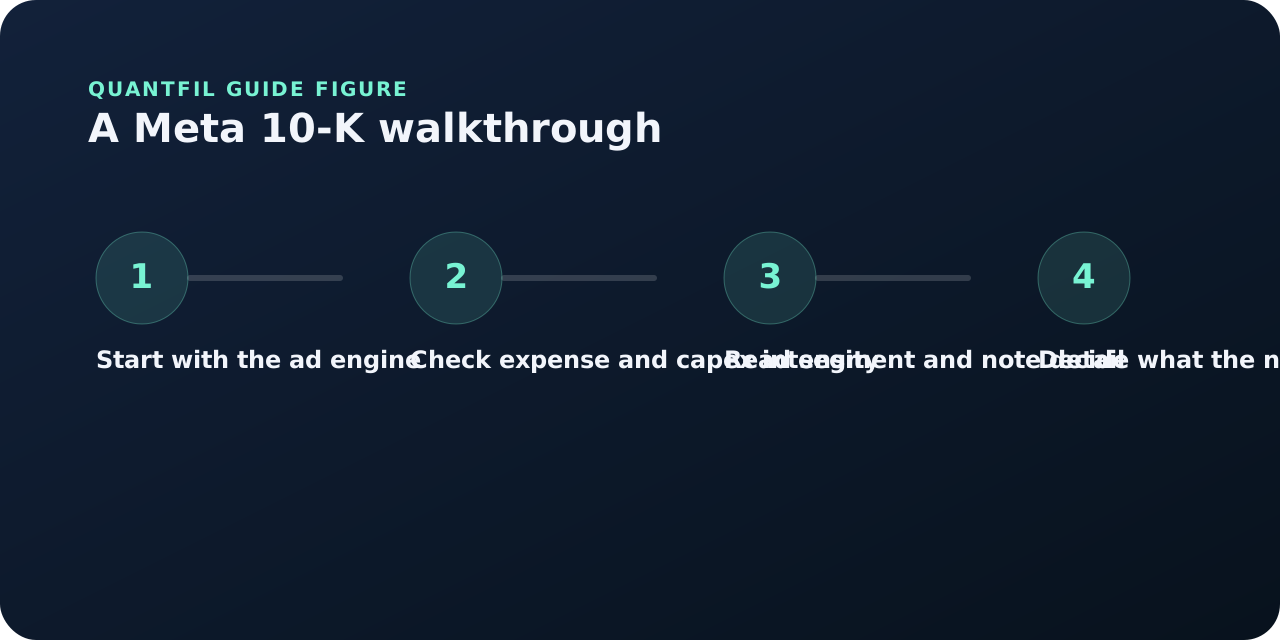
A practical workflow
Read Meta's 10-K as a balance problem. The question is whether the core ad engine still does enough work to make the AI and platform-buildout spend feel earned and absorbable.
That workflow becomes easier to repeat when you write the next question down before moving on. The filing should not just be read. It should leave you with a sharper question than you had at the start.
Common mistakes
The common mistake is reading Meta as either a pure advertising company or a pure AI-spend story. The filing is most useful when both sides are kept in frame together.
A slower, more selective filing habit usually beats a faster but less structured one. In most cases the difference comes from knowing what you are trying to prove before you go hunting through the document.
How to use this on Quantfil
Quantfil helps because the filing summary and statement sections make the core cash-engine read easier to establish before the reader digs into capex, segment pressure, and the longer-term platform bet.
Quantfil is most useful when the educational question comes first and the company page comes second. Learn the document, then use the filing page to apply that reading habit to a real report.
Ask yourself
Try it on Quantfil
Move from the educational overview into live filing pages that show summaries, comparison cards, and source-linked context.
Try the next workflow
Use one of these next-step pages if you want to turn the concept into a repeatable habit on a live filing, earnings setup, or company comparison task.
Frequently asked questions
Why is Meta a good filing case study?
Because it combines a very strong current engine with a large spend program that forces the reader to weigh quality against ambition.
What section should I read first?
Usually MD&A and the business description, then the statements and the note areas tied to capex, segments, and stock compensation.
What is the biggest risk of misreading Meta's filing?
Over-focusing on the strength of the ad business without asking what the investment cycle is doing to the quality of the broader earnings story.
How does Quantfil help?
It helps you establish the core read before you start asking what the spending program is changing around it.
Primary sources and further reading
Editorial note and disclosure
Quantfil publishes these guides for informational purposes only. They are designed to help readers understand filing structure, investor workflow, and source verification, not to offer investment advice or security recommendations.
If a guide looks stale, unclear, or incomplete, use the source links above and review our editorial standards, corrections policy, and editorial team page for how the site handles updates and accountability.